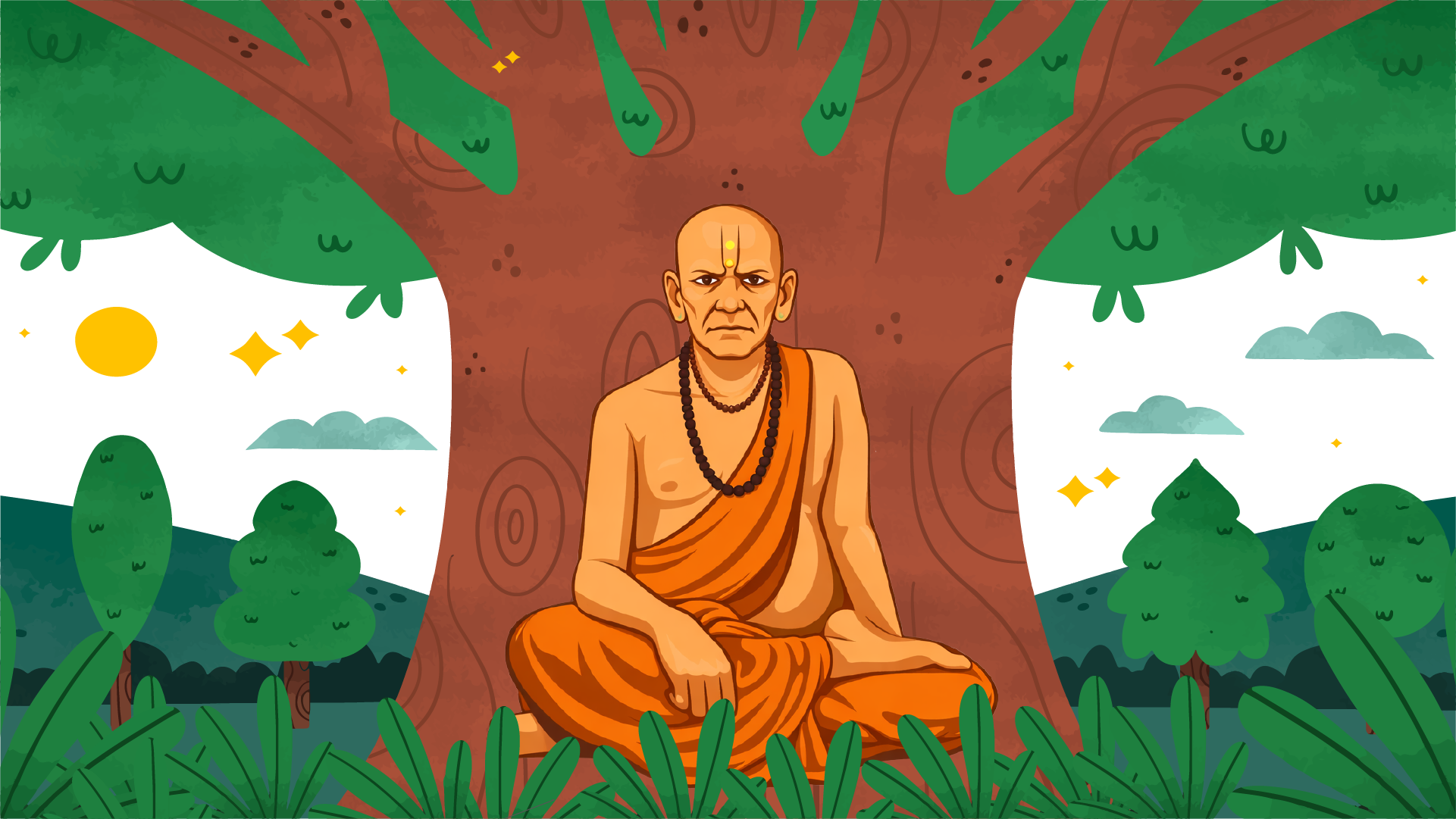
In Hinduism, Atal Lok is recognized as the first of the seven underground worlds that lie beneath our earthly realm. This is a realm filled with deep material enjoyment, captivating illusions, and enticing seductions, governed by the asura Bala, the offspring of the architect-demon Maya.
In traditional Hindu cosmology, the universe comprises fourteen main lokas, divided into seven higher (Urdhvalokas or Vyahrtis) and seven lower realms (Adholokas or Patalas).
The Puranas and subsequent cosmological texts identify seven lower worlds: Atal, Vital, Sutal, Talatal, Mahatal, Rasatal, and Paatal, situated beneath the Bhulok, or earth. Contrary to the perception of these worlds as mere “hells,” they are described as highly developed realms equipped with distinct beings, pleasures, and technologies.
Explore Atal Lok, the mystical subterranean realm of Hinduism, with Vedic & Puranic insights on its divine beauty & spiritual symbolism.
In Vaishnava literature, these regions are frequently referred to as “subterranean heavenly planets.” The Vishnu Purana and Bhagavata Purana describe lower Lokas as being situated tens of thousands of yojanas beneath the earth’s surface, each with distinct dimensions and inhabitants. The realms of Pataal Lokas form a descending hierarchy characterized by increasingly dense material pleasure and “tamasic” consciousness.
What is Tamasic Consciousness?
According to the Samkhya school of Hindu philosophy, tamas, which is derived from the Sanskrit word for “darkness,” is one of the three guṇas that are identified. The other two guṇas are rajas, which refers to passion and action, and sattva, which refers to purity and goodness. This particular trait is marked by a lack of energy, dullness, and sloth, and it is commonly considered the least favorable of the three guṇas.
Atal Lok in the Ancient Indian Scriptures
The Bhagavata Purana, especially Skandha 5, Chapter 24, talks about the “subterranean heavenly planets,” which start with Atal Lok and end with Paatal Lok.
In these descriptions, Atala stands out as the foremost and most esteemed of the seven Pataalas. It lies just beneath our world, brimming with opulence, riches, and enchanting magic. The Padma Purana, Devi Bhagavata Purana, and Vishnu Purana each present a similar sevenfold list, though they vary in the names and the sequence used. Atala consistently ranks as one of the most prominent netherworlds.
Atala-loka is recognized in the Shiva Purana and Vaishnava āgamic texts, such as the Padmasamhita, as one of the seven cosmic realms, emphasizing its significance within the traditional cosmological framework of Hinduism. The references to Atala across various sects, including Vaishnava, Shakta, and Shaiva, highlight its integral role in the broader Hindu cosmology.
Who rules over Atal Lok?
Bala is portrayed as a master of maya, using his mystical abilities to craft seductive environments that ensnare beings in immense sensual pleasure. Modern interpretations suggest that Bala “creates” illusions of pleasure and women, symbolizing mental forces that drive attachment and desire.
Beings of Atal Lok are depicted as eternally young and beautiful, indulging in fun and romantic pleasures. The asura Bala, son of the demon architect Maya, rules this realm with the power of illusions. It is believed that his yawning mouth produced three types of enchanting women, symbolizing various aspects of desire and attachment.
These women, who are referred to as Svarini (for self-willed), Kamini (for lustful), and Pumscali (for restless), are examples of seductive feelings that take control of reason and intellect.
Bala uses a special potion called “Hatakaras” to make people stronger and more attractive when they enter Atala. This makes them want to indulge in sensuality and become drunk. These kinds of pleasures are meant to keep the soul trapped in an illusion and focused on material things.
The magical and mysterious aspects of Atal Lok.
Atala is a magical realm filled with mysticism and extraordinary inhabitants. Bala possesses skills in magic and deception, able to create enchanting magical displays. The environment is rich in magical energy, providing thrilling experiences while also fostering a sense of spiritual ignorance and entrapment.
The Puranas repeatedly convey that Atala is not a place of suffering but a sophisticated trap that leads beings to forget higher truths due to overwhelming pleasures. It illustrates how maya, in its most alluring form, can ensnare consciousness in saṃsara (the cycle of birth and death).
What does that mean?
A contemporary interpretation of Atala-loka perceives it as a representation of a particular state of consciousness, rather than merely a physical underworld. Atala denotes a realm where desire, fantasy, and sensual imagination rule, trapping the mind in ego-driven illusions of pleasure.
The “three types of women” represent inner forces such as attachments, cravings, and emotional patterns that distract the jīva from its higher spiritual goals.
Philosophers who connect the fourteen lokas to levels of consciousness say that Atala is the first level below the neutral human level, where pleasure becomes more complicated but also more binding.
In this psychological framework, ascending from Atala signifies the purification of desires and the restoration of discernment, whereas descending into lower pātālas indicates a deepening entanglement in fear, hatred, and spiritual ignorance.
Final thoughts.
Atala-loka, for modern Hindu seekers, can be interpreted in three ways: as a real Puranic location, a subtle astral plane, and a metaphor for inner states. Literally, it represents a world beneath the ground under the control of Bala, where advanced beings engage in profound sexual encounters through me. It symbolizes the aspect of the mind captivated by worldly pleasures that neglects the deeper pursuits of dharma and mokṣa.
This layered reading connects ancient cosmology to modern life, suggesting that when actions arise from craving and ego, one exists in Atala despite its physical presence on earth. In contrast, practicing viveka, self-control, and devotion elevates one’s inner orientation from Atala and other pātālas to higher lokas characterized by clarity, compassion, and spiritual insight.
Atal Lok symbolizes strong, false pleasures and is rooted in the Vedas’ cosmology, as detailed in the Puranas and later āgamic texts. Atala serves as both a mythical world within the Brahmanda and a representation of how māyā can seduce the human mind.