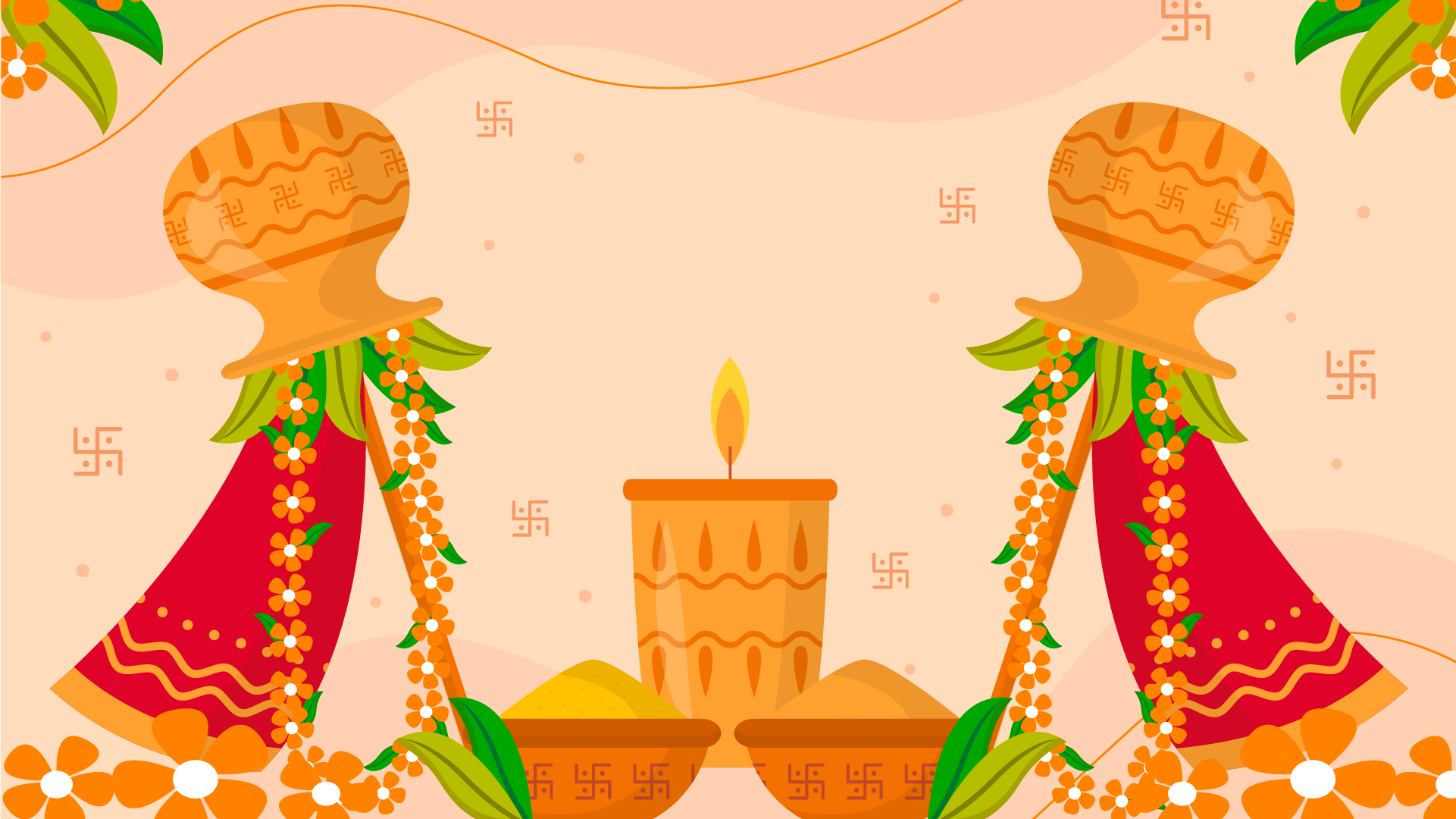
The swastika in Hinduism is one of the oldest and most important symbols since ancient times. It means positive luck, order in the universe, and spiritual wealth. For thousands of years, it has been a sacred symbol in Indian culture and religion.
The swastika is more than just a pretty picture; it has deep spiritual and symbolic meaning that can be found in Hindu holy books like the Vedas and Upanishads.
Read about the swastika’s history and what the significance of the swastika symbol is in Hinduism. Explore its references in religious texts, how it is linked to the divine, and what it means spiritually in Hinduism. Uncover how the swastika is a sign that still gives people faith, devotion, and a sense of who they are.
The origins of the swastika symbol in Hinduism.
The word “swastika” is made up of the Sanskrit words “su,” meaning “good” or “auspicious,” and “asti,” meaning “to be” or “exist.” In other words, “swastika” means “that which is good” or “bringing health.” This etymological basis shows that people think the symbol stands for happiness, wealth, and spiritual harmony.
The Swastika sign has been around for a long time, even before many of the civilizations we know today. Archaeological evidence indicates its utilization in the ancient Indus Valley Civilization (circa 3300–1300 BCE). It was an important symbol on pottery, seals, and other ancient objects used by the first people to live on the Indian subcontinent. This implies that the Swastika held sacred and cultural significance from its inception.
The Vedas, written between 1500 BCE and 500 BCE, were the first Hindu sacred texts to include and explain the swastika’s religious and philosophical meaning. The Vedas refer to the Swastika or its conceptual significance in relation to auspiciousness, cosmic rhythm, and spiritual well-being, although the term “Swastika” itself appears less frequently than the symbol’s metaphysical concepts.
Do Indian Vedas refer to the swastika symbol?
The Vedas don’t talk about the Swastika symbol very often, but they do talk about ideas that are closely related to what it means, like good luck, cosmic order (Rta), and the cycle of creation and destruction.
According to the Vedic hymns, the universe is subject to strict laws, rhythms, and holy cycles. The swastika’s balanced, circular shape is a way to show these ideas.
The Samhitas (collections of hymns), especially the Rigveda, call on gods like Surya (the Sun God), Agni (the Fire God), and the Ashvins (divine twin horsemen who are linked to healing and good luck).
The swastika symbol also represents these gods, who stand for energy, light, and cosmic life. The Swastika’s regular, rhythmic patterns are like the sun moving all the time, the seasons changing, and the cycles of time that are praised in Vedic liturgy.
Does the swastika symbol have any connection with the Upanishads?
The Upanishads philosophically elaborate on the Vedas, providing a more profound metaphysical framework for interpreting symbols like the swastika. The Upanishads discuss concepts associated with the swastika, including the eternal essence of the soul (Atman), the cyclical nature of time and existence (samsara), and the pursuit of liberation (moksha).
The swastika’s arms that go around in circles can be considered a symbol for the wheel of samsara, which is the never-ending cycle of birth, death, and rebirth that the soul goes through. The Upanishads maintain that understanding and transcending this cycle through spiritual knowledge and realization enables the soul’s union with the ultimate reality (Brahman).
In this context, the swastika symbolizes the eternal cycles of existence and the auspicious path to liberation, making it a profound spiritual emblem within the Upanishadic framework.
Does the swastika symbol have any connection with the Hindu gods?
The swastika is a symbol that is linked to many Hindu gods because they are linked to safety, good luck, and the order of the universe.
The Swastika is often associated with the sun god.
The swastika is closely connected to Surya, one of the main gods, who is the god of the sun. The most common shape for the symbol is one where the arms stick out at right angles, which looks like the sun’s rays coming from all sides.
Surya, the source of light and life, stands for energy, vitality, and the universe’s ability to keep things going. The swastika’s design shows these traits.
In Vedic hymns and later Puranic texts, Surya is called the cosmic life force. His daily trip across the sky keeps the natural rhythms of day and night, seasons, and other things going.
This is what the swastika’s cyclical nature means. People who worship Surya often use the swastika to ask for his blessings for optimal health, money, and spiritual growth.
Ganesha
The swastika is also like Ganesha, the Hindu god of good beginnings and problem-solving. People often use the symbol during Ganesha pujas (worship ceremonies) and on invitations and decorations for new events like weddings and business openings.
The swastika is a symbol of the positive energy that Ganesha provides to ensure that everything goes well and that life events go well. This shows how the symbol keeps you safe and makes you rich.
Lakshmi and Vishnu
According to the Vaishnavite tradition, the swastika is a sign of Vishnu (the protector of the universe) and his wife Lakshmi (the goddess of wealth and prosperity). People often draw the swastika in Vaishnavite homes and temples to ask for God’s blessings and beneficial fortune.
It represents Vishnu’s power to protect and Lakshmi’s blessings for both material and spiritual wealth. This strengthens the two sides of the symbol that stand for protection and prosperity.
The philosophical significance of the swastika
The swastika has many philosophical meanings in Hinduism, along with its religious ones. The four arms of the swastika stand for Dharma (doing what is right), Artha (money), Kama (desires), and Moksha (freedom). It signifies the balanced life that includes being honest, making money, getting what you want, and freeing your mind.
The symbol’s arms point in the four main directions: north, south, east, and west. This proves that God is everywhere and that everything is in balance.
The swastika stands for cyclical time, which means that things happen over and over again in cosmic processes, seasons, and the journey of the soul.
The symmetrical shape of the object represents the balance between opposing forces, like life and death, light and dark, and creation and destruction.
Hindu rituals and everyday life incorporate the swastika.
Hindus use the swastika in their daily lives and in their religious practices. To ask for protection and positive luck, people paint it on their cars, doorways, thresholds, and ritual tools. During festivals like Diwali and Navratri, people use the swastika in rangoli (floor designs) to bless spaces and bring beneficial energy.
At weddings and other important events in life, the swastika stands for the blessings of the divine for wealth, happiness, and spiritual growth. Drawing it with turmeric or vermilion powders, rice grains, or sandalwood paste makes it more holy.
You can observe the swastika on doorways, pillars, and altars in temples. It is a sign of divinity and positive luck in the universe.
Final thoughts.
In essence, the swastika is a profound symbol in Hinduism, representing cosmic order, beneficial luck, and the cyclical nature of life. It embodies the four main goals of human existence and encourages alignment with divine principles.
Regarded for millennia, the swastika signifies health, balance, and sacred order, serving as a crucial element of Hindu identity and spirituality. Today, it continues to be a symbol of favorable fortune and spiritual insight within Hindu thought.