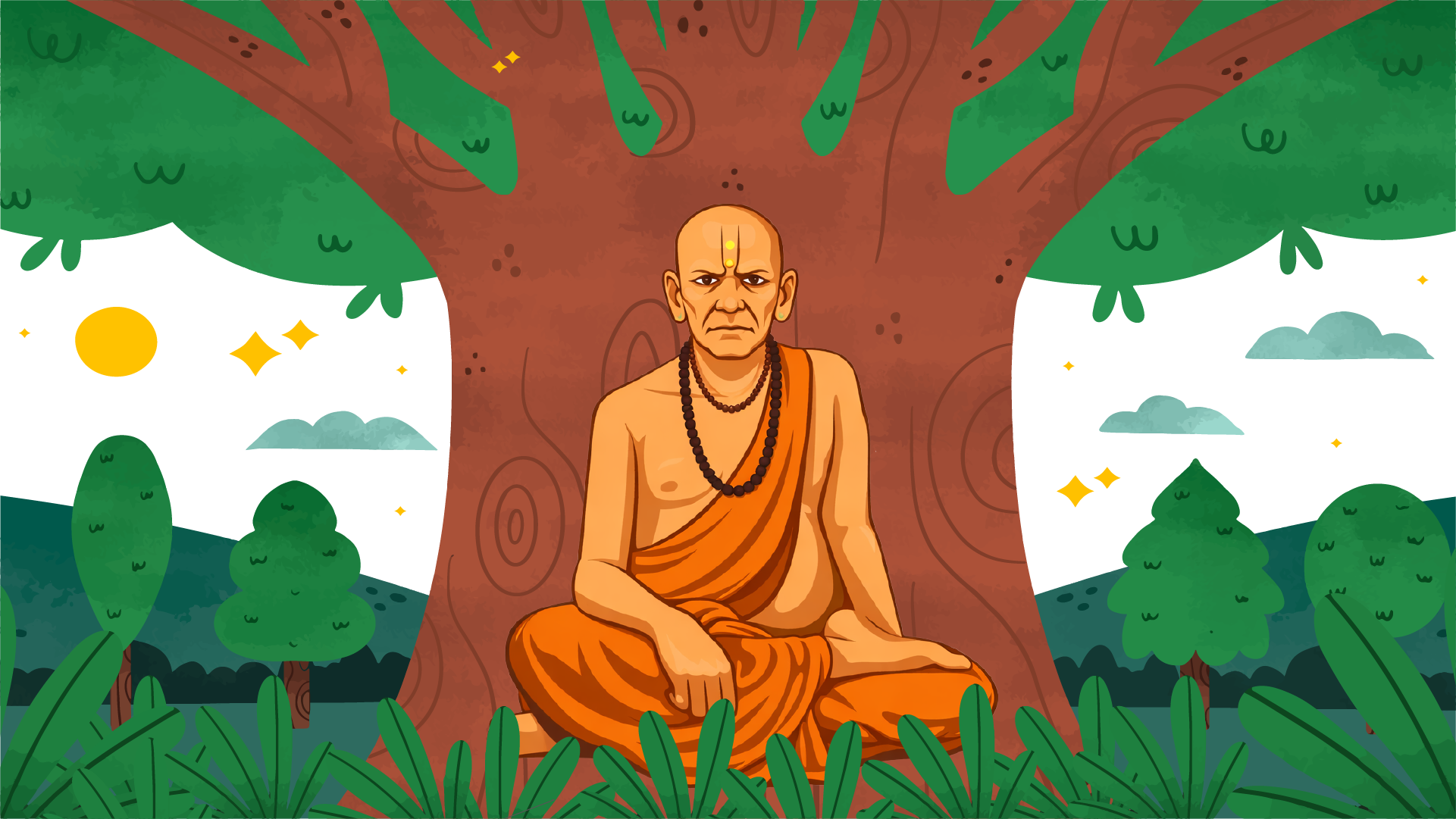
In the quiet folds of India’s past, where rivers once whispered mantras and forests echoed with chants, the ashram came to be. It wasn’t a stone monument; it was a living rhythm of simplicity, wisdom, and inner awakening.
The ashram was the heart of Indian civilization long before cities and universities were built. It was a safe place where people could learn, grow, and make life itself a sacred experiment in self-discovery.
Even now, when skyscrapers reach the sky and smartphones are in our hands, the word “ashram” still has a mysterious power. It brings to mind peace, discipline, and purpose—things that people still look for in modern life.
What does “ashram” mean?
An ashram is a lot more than just a temple or spiritual retreat. It is a way of life, a place where people live together to find themselves, the truth, and peace. In ancient India, the ashram was a hermitage, or a place away from the noise of society, usually near rivers, forests, or mountains.
A guru led the residents there, who were known as sadhakas (spiritual seekers). They had a strict daily schedule that included meditation, study, physical work, and thinking. Life in an ashram was simple but meaningful. Every task, from sweeping the courtyard to reciting verses, was done with care and devotion.
What does the word “ashram” mean in Sanskrit?
The Sanskrit root “śram” (श्रम) means “to make effort, to strive, or to practice austerity.” The word “Ashram” (आश्रम) comes from this root. The prefix “ā” makes it sound like it has a purpose or direction. So, “ashram” literally means “a place of effort or spiritual striving.”
This is deep because the ashram was never about getting away from it all; it was about living with effort. It was a place where people consciously worked on cleaning up their bodies, controlling their minds, and waking up their spirits. Indian ashrams, on the other hand, encouraged balance.
They taught people to live simply but meaningfully, to act selflessly, and to see divinity in everyday life.
Where did the ashram tradition come from?
The beginnings of ashrams can be traced back to the Vedic period (1500–500 BCE), when sages (rishis) lived in forest hermitages called Tapovanas (places of austerity). These early ashrams weren’t schools; they were parts of the guru’s life. People who wanted to learn the Vedas, how to meditate, and how to live a good life (dharma) naturally started to gather at the guru’s home.
The Rigveda and Upanishads are two examples of scriptures that talk about these kinds of forest hermitages, where people learned not by reading scrolls but by talking, thinking, and having experiences. The rishis thought that truth could not be taught—it had to be realized.
One of the first and most respected ashrams was that of Rishi Vashishtha, who was King Dasharatha’s teacher and Lord Rama’s teacher. In the same way, Rishi Vishwamitra’s ashram taught princes how to be disciplined and how to use weapons, combining spiritual knowledge with practical skills.
These weren’t hidden caves where people gave up everything; they were lively communities where education, spirituality, and social responsibility came together.
The Golden Age: The Best Time for Ashrams
The ashram system had become a big part of Indian life by the time the Mahabharata and Ramayana were written. Each region had its own hermitages, typically constructed by well-known sages like Agastya, Kanva, and Gautama. Long before universities like Nalanda or Takshashila opened, they became “centers of learning, healing, and philosophy.”
How does it feel living in an old ashram?
Discipline and harmony were the basis of the daily life at an ashram. Meditation and singing hymns started the day before the sun came up. People from the community and students would come together to learn about philosophy, ethics, medicine, and the natural sciences from the guru.
In the afternoons, they worked by taking care of cattle, gathering firewood, cooking, or helping other disciples. We spent our evenings thinking about ourselves and chanting under the stars.
The food was simple, grown in the ashram, and everyone shared it. There was no hierarchy of privilege; everyone, even the guru, did chores. The environment encouraged humility, concentration, and a strong bond with nature.
Ashrams were also ecosystems that could take care of themselves. Many had herbal gardens for medicine, small granaries, and places to store water. They were some of the first examples of sustainable living because they focused on ecological balance and minimalism.
The Spiritual and Social Role of Ashrams
Ashrams weren’t separate from society; they were its moral center. Before wars, kings asked wise men for help. Villagers went to ashrams for moral and spiritual advice. They were like “spiritual universities,” “healing centers,” and “safe havens for travelers.”
They also helped keep India’s intellectual heritage alive. Ashram lineages protected and passed down sacred texts, oral traditions, and rituals. Many great scriptures, such as the Upanishads and the Yoga Sutras, were written in these peaceful forest hermitages.
Ashrams were more than just places to live; they were places where everyone was equal and could get in. People from all walks of life, including princes, farmers, and even outcasts, could learn and grow together. All that was needed was honesty and self-control. The ashram system was a key part of India’s moral and cultural unity because it welcomed everyone.
The disappearance of the ashram system.
The ashram system, like many other old systems, fell apart because of changes in history and society. There were a few important reasons:
1. Invasions from other countries and political unrest
Repeated invasions made it hard for forest communities to live in peace. Many ashrams were destroyed or left behind when monks and scholars fled to safer areas. People stopped focusing on spiritual growth and started focusing on survival.
2. Urbanization and Changes in How People Live
As towns and kingdoms grew, schools started to move to cities. People wanted to be rich, comfortable, and trade, so they moved away from the quiet ideals of ashram life. The desire for material progress overshadowed the simplicity of spiritual discipline.
3. Policies for Education in the Colonies
The British colonial system made ashrams even less important. Their introduction of Western education supplanted indigenous educational methods. Formal classrooms, tests, and textbooks took the place of the guru-shishya tradition.
4. Loss of Support and Trust
As rulers lost power and society became more modern, ashrams had a hard time making ends meet. A lot of gurus and scholars couldn’t keep up with big groups anymore. Some people became isolated and were thought of as relics of a time long gone. Most traditional ashrams had either disappeared or turned into small spiritual centers by the early 1800s.
How do modern Indian ashrams thrive?
The spirit of the ashram has lived on for hundreds of years. In fact, it has quietly changed itself in India today. There are many ashrams from the foothills of the Himalayas to the backwaters of Kerala that still help people find themselves, help others, and live in harmony with nature.
Some are traditional and focus on yoga, meditation, and Vedic studies. Others are more modern and combine ancient wisdom with modern practices like holistic healing, organic farming, and helping the poor get an education.
Some well-known examples are
- The Ramakrishna Mission (Belur Math) group was started by Swami Vivekananda and combines spiritual training with helping others.
- Sri Aurobindo Ashram (Pondicherry), a place for spiritual growth and integral yoga.
- Parmarth Niketan (Rishikesh), a place where people can do yoga, work on environmental issues, and learn about youth issues.
- Art of Living International Center (Bengaluru), a modern ashram that combines old breathing techniques with helping others.
There are more than 3,000 registered ashrams in India right now, but it’s hard to say exactly how many there are because many of them are informal or community-based. That may seem like a lot, but in a country with more than 1.4 billion people, it’s only a small part of what we need to do to fix the spiritual, emotional, and environmental problems we face today.
Are there enough ashrams in India today?
Modern India has a lot of ashrams, but not the “ashram spirit” that people used to have. There are places where you can be calm and think, but they are still islands in a sea of restlessness. The goal is not to build more ashrams but to bring their spirit back into our homes, schools, and workplaces.
Think about how our schools would be if they were like an ashram, where learning wasn’t rushed, teachers were mentors, and students learned to care about others and have a purpose.
Consider environments where the principles of service and the practice of yoga influenced leadership styles. The old ashram aimed for something deeper: not to escape, but to blend—bringing spirituality into everyday life.
But it’s clear that India needs more places to relax and think. Living in cities has made people spiritually tired and cut off from themselves and nature. More ashrams, especially those that are open to everyone and not tied to any one religion, could be places of healing, sustainability, and rediscovery of human values.
Why are the Ashrams still significant?
The ashram is still important today because it can answer questions that technology can’t. It teaches patience in a world that is always in a hurry. It brings back silence in the middle of noise. It reminds us of unity in the face of division.
An ashram invites people to stop and live slowly, mindfully, and with respect for all living things. It teaches that spirituality is not a luxury but a necessity; that self-knowledge is the foundation of all progress.
Mahatma Gandhi didn’t bring back an old institution when he started the Sabarmati Ashram; he made it new for a new time. His ashram was a good example of how to live together, change society, and have moral courage. It showed that the ashram ideal could work even when politics were bad, and it could guide the whole country in the right direction.
Final thoughts
The ashram’s evolution parallels India’s own journey, reflecting a national desire for wisdom, peace, and harmony. Its purpose remains to remind individuals that true progress originates from within, fostering balance and self-awareness in various environments.
Today’s need for a “biggest ashram” emphasizes “conscious living,” promoting simplicity, honesty, and helpfulness. Beyond a physical space, the ashram embodies a mindset of awareness, kindness, and freedom. By re-embracing this spirit, India can merge its ancient wisdom with modern aspirations, leading to both development and heightened consciousness.