In Hinduism, the Vedas are considered the oldest and most important religious scriptures. These ancient Sanskrit holy books are often viewed as divine texts providing knowledge beyond human understanding. The core of their approach is the pursuit of general truths that can promote peace, justice, and spiritual freedom for individuals and society.
Who wrote the Vedas?
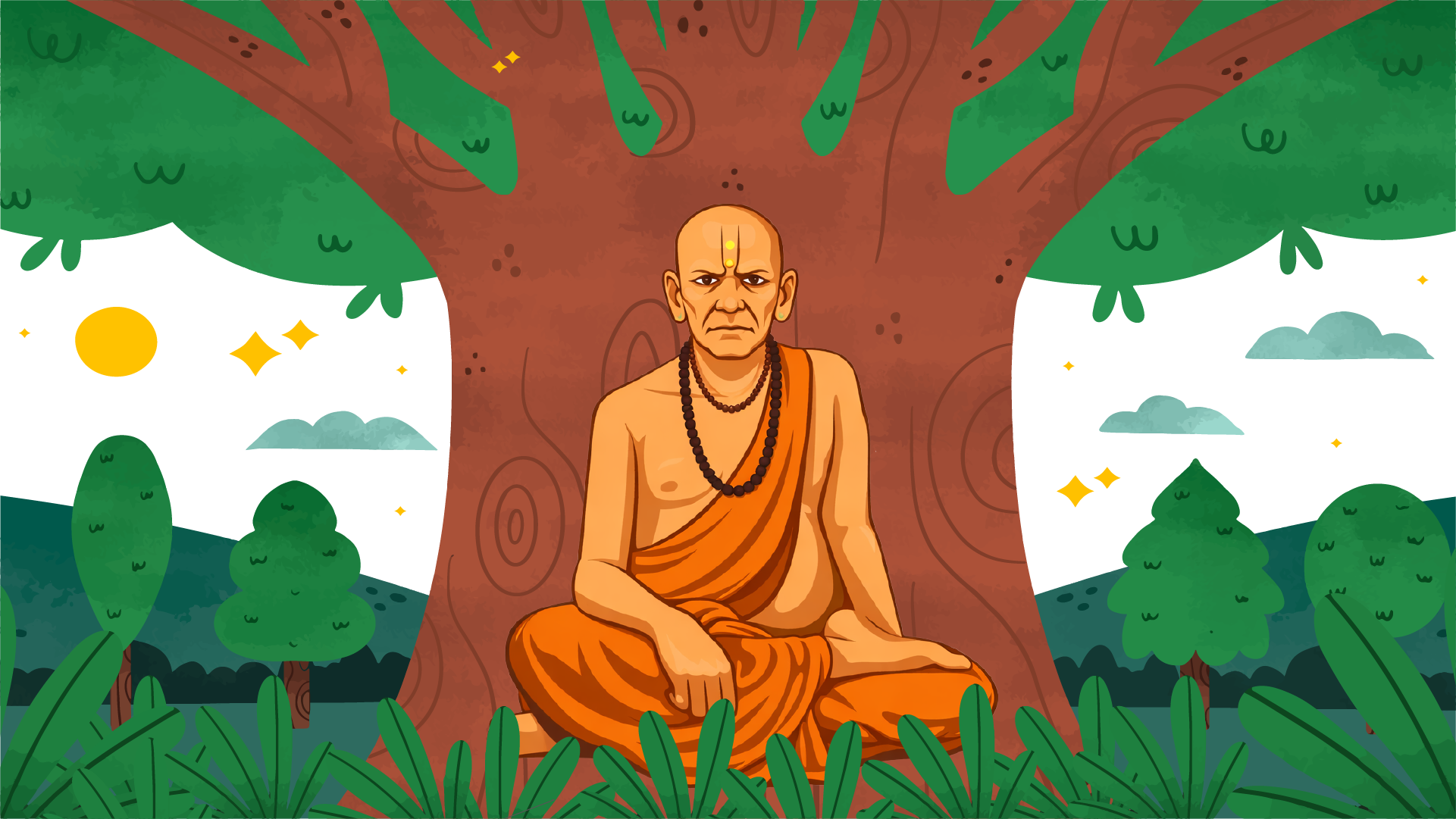
The sacred texts found in the Vedas did not originate from humans. The divine insight, first perceived as timeless truths, was first disclosed to ancient sages called rishis through profound meditation and spiritual experience. It is believed that the wise man Vyasa, who is also known as Vedavyasa, was the one who compiled and organized the hymns of the Vedas into the four different collections.
Who was Ved Vyasa?
Ved Vyasa, born to Parashara and Satyavati, lived on an island, earning the name “Dvaipayana,” meaning “born on an island.” Vyasa, a significant figure in Hinduism’s spiritual history, wrote the Mahabharata, the world’s longest epic poem, and the Bhagavad Gita, a globally cherished philosophical debate, contributing significantly to Vedic knowledge preservation. Vyasa, a symbol of eternal enlightenment, is believed to preserve sacred scriptures, guide humanity, and inspire dharma, highlighting the eternal connection between divine and human realms.
How are the manuscripts for the original Vedas preserved?
Before being written down, the Vedas, and the Rig Veda in particular, were passed down verbally for a number of centuries. It is generally agreed that this oral tradition is the most important approach to transmission. Manuscripts made from palm leaves or birch bark are examples of written texts that have been handed down through the generations; they preserve information rather than taking the place of oral tradition.
Several religious groups, which are actively engaged in the practice of Vedic chanting nowadays, continue to preserve this oral legacy until today. However, the Vedas, translated and extensively studied globally, offer valuable insights into ancient India’s thought, spirituality, and culture. An explanation of each of the four Vedas is provided below:
Rigveda: the cosmic hymns.
The Rigveda is the oldest and most extensive of the Four Vedas. It is comprised of more than one thousand hymns that are organized into 10 volumes that are referred to as “Mandalas.” Agni, which is fire, Indra, who is a warrior and the monarch of the gods; and Soma, which is a holy plant and a ritual drink, are all praised in these hymns. The poem offers a glimpse into Vedic cosmology, detailing the origins of the world and the natural forces responsible for its maintenance.
Yajurveda: The art of sacrifice.
In the course of complex Vedic ceremonies known as yajnas, priests would recite mantras and prescriptions for sacrifices from the Yajurveda, which is a collection of mantras written in prose. It offers detailed instructions on how to carry out rites in order to preserve the relationship between the cosmos and society. The Yajurveda is further segmented as Shukla Yajurveda, characterized by well-organized prose, and Krishna Yajurveda, which combines hymns and ritual explanations.
Samaveda: The melodies of the divine.
A significant portion of the Samaveda is comprised of hymns that are borrowed from the Rigveda but are structured musically so that they may be performed during ceremonies. As the origin of traditional Indian music and chanting traditions, this Veda is revered for its ability to elevate sacred sounds via the use of melodic intonations. The Samaveda highlights musicality as a spiritual energy that aids divine communion during worship, demonstrating its potential to influence human consciousness.
Atharvaveda: magic, medicine, and mysticism
The Atharvaveda is distinct from the other three Vedas since it focuses mostly on healing and protecting charms, as well as common life-related topics. There are prayers, charms, and incantations contained inside it that are intended to cure illnesses, protect against evil, and ensure wealth. In addition to this, it delves into profound philosophical insights and contemplations on the mysteries of existence. The Atharvaveda, a philosophical treatise, bridges the gap between spirituality and practicality, addressing both earthly and philosophical issues simultaneously.
The structure of the Vedas.
There are four major sections that make up the Vedas, and they each reflect a different function and subject matter.
- Samhita are groups of songs, mantras, and prayers called Samhitas. They are the oldest parts of the Vedas and are mostly chanted during ceremonies. One example is the Rigveda Samhita, which has more than 1,000 songs.
- Brahmanas are written works of prose that explain the ceremonies and practices talked about in the Samhitas. They explain in great detail the sacrifices and rites in the Vedas and what they mean.
- Aranyakas, meaning “forest texts,” are a group of works that connect the religious Brahmanas to the more philosophical Upanishads. They were meant to be used for study and meditation in solitude, usually in forests.
- The Upanishads are the philosophical and mystical parts of the Vedas. They talk about deeper spiritual ideas like karma, liberation (moksha), the nature of the self (Atman), and ultimate truth (Brahman).
This layered structure of Vedic knowledge, combining practical ritual and profound philosophy, has ensured its transmission through oral and manuscript traditions in Hinduism.
What is the significance of the Vedas in Hinduism?
In Hinduism, the Vedas are considered to be of an unrivaled level of purity and power, and they serve as the traditional religious and liturgical center of the religion.
Dharma, which means “moral order”; Karma, which means “action and consequence”; and Moksha, which means “liberation,” are some of the core ideas that they construct. The Vedas are a source of inspiration for Hindu worship, festivals, and daily rituals because of the intellectual and ceremonial features they contain.
Chanting Vedic hymns at temples and during sacred ceremonies is a practice that continues to be practiced. The Upanishads, part of the Vedic corpus, shape Hinduism schools of thought, significantly influencing views on the divine, universe, and self.
In addition, the Vedas also include early medical practices, astronomical astronomy, poetry, and ethical principles, making it a comprehensive body of knowledge. The fact that they have been preserved as an oral tradition is evidence of the importance that is placed on sound, vibration, and accurate transmission, all of which are considered to be sacred actions in their own right.
Final thoughts.
The Vedas, ancient wisdom texts, inspire seekers of truth and spiritual knowledge through their four Vedas: Rigveda, Yajurveda, Samaveda, and Atharvaveda. Despite rare manuscripts, the spirit of the Vedas continues to illuminate the path of dharma, knowledge, and liberation in Hinduism and beyond.