Bhuvarlok is a significant concept in Hindu cosmology, representing the realm that exists between the earthly plane (Bhurlok) and the celestial heavens (Svarlok). It is said to be the atmospheric sphere that surrounds the Earth and reaches up to the sun.
Bhuvarlok is associated with spiritual growth, ascetic success, and the residences of wise individuals and semi-divine beings. In Vedic, Upanishadic, and Puranic traditions, it represents a metaphysical dimension critical to the spirit, beyond mere physical or astronomical space.
Learn about Bhuvarlok’s spiritual significance, its Vedic references, and its connection to chakras in Hindu cosmology.
Who are the inhabitants of Bhuvarlok?
Bhuvarlok is home to many different kinds of beings, both physical and subtle. The Puranas and other Hindu holy books say that the main people who live in Bhuvarlok are Siddhas, Munis, Rishis, Spirits, Pitrs, Gods, or Demi-Gods.
Who are Siddhas?
In Indian religions and traditions like Hinduism, Jainism, and Buddhism, the term “Siddha” is used to describe someone who has reached a high level of spiritual powers, spiritual realization, or enlightenment.
They are believed to have transcended the physical body and the earthly realm, often associated with supernatural abilities called siddhis. Additionally, the term refers to the founders of the Siddha medicine system in South India, which integrates science, mysticism, and spirituality.
Who are Munis and Rishis?
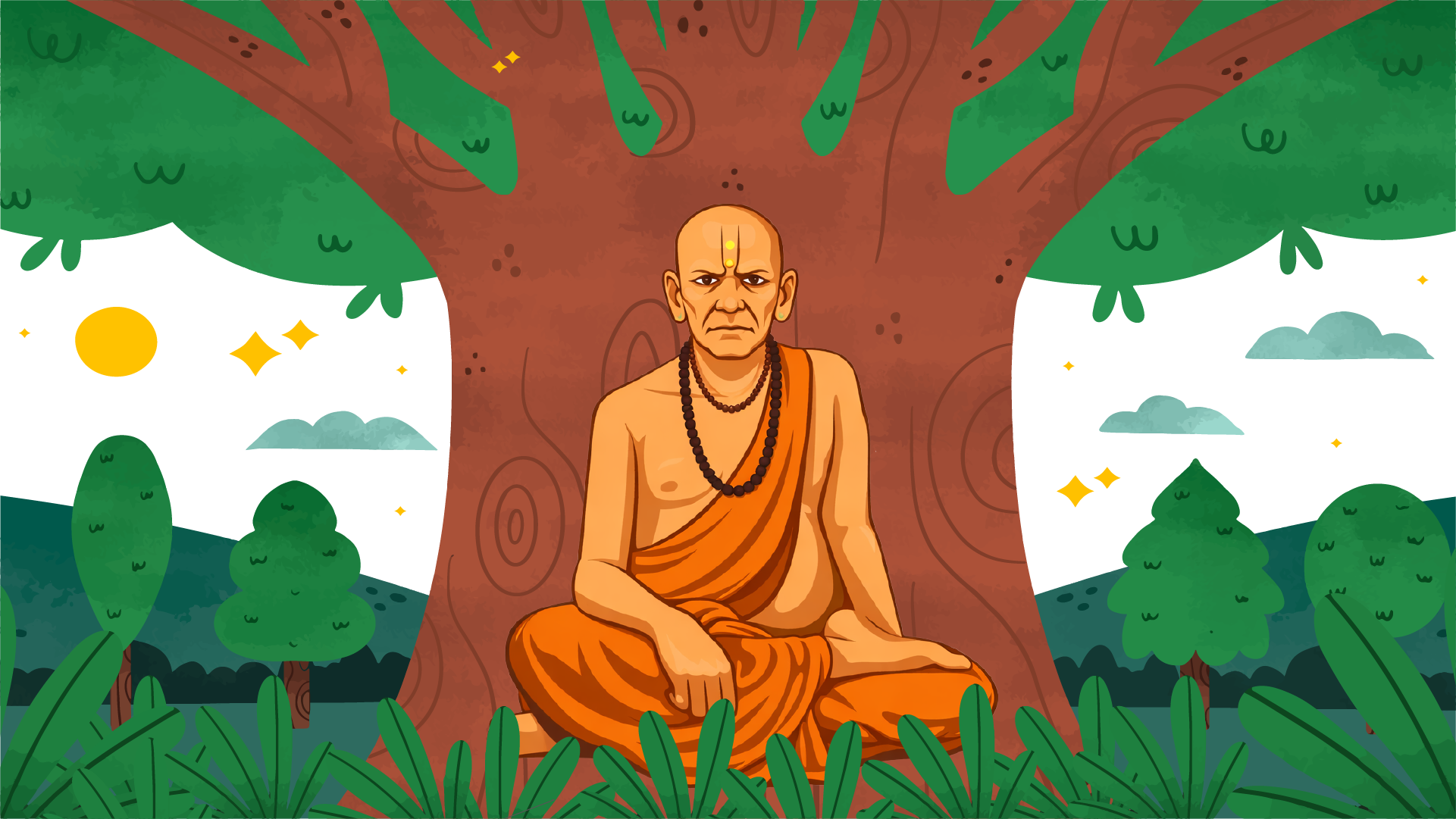
Munis and Rishis are wise people and seers who have given up their worldly lives and live in the higher parts of the atmosphere. They often meditate and guide people from afar.
The “Rishis” are wise people who are thought to have received spiritual knowledge and written the Vedic hymns. They are also known as a “seer” or “visionary.” In contrast, “Munis” are ascetics who live a life of quiet meditation and introspection, practicing silence (maun) and contemplation.
A rishi is mostly known for divine knowledge and passing it on, while a muni is more focused on inner peace and deep thought. An individual may be both a rishi and a muni, as these titles do not denote identical roles or meanings.
What are spirits, or pitrs?
Spirits, also known as pitrs, are the spirits of ancestors and souls who have passed away but have not yet attained liberation, inhabiting this transitional realm.
In Hinduism, Pitrs are the spirits of ancestors residing in Pitrloka, overseen by Yama, the god of death. They are revered as primeval deities who bless their descendants with health, wealth, knowledge, and longevity.
Worship of Pitrs is essential, with the Shraddha ceremony being the main ritual, involving offerings of food and water to sustain their spirits. The 16-day period of Pitru Paksha is crucial for ancestral worship. Neglecting ancestral rites may result in the deceased becoming restless ghosts, suffering from eternal hunger and thirst.
Bhuvarlok is also home to Devas and their king Indra in Vedic cosmology. These celestial beings transcend earthly physical constraints, often depicted traversing the atmosphere and acting as intermediaries between the human and divine realms.
What is the spiritual significance of Bhuvarlok?
Bhuvarlok is a special place in the soul’s spiritual journey. It is believed that the energy body transitions to this place after the physical body dies, before ascending to higher realms or returning to the earthly plane. This world is linked to spiritual ascent and ascetic achievements.
What is spiritual ascent?
Bhuvarlok is the first step on the soul’s journey up. This is when the person begins to release their earthly attachments and prepare for spiritual experiences.
Ascetic Achievements
Sages and yogis, who gain higher levels of awareness and supernatural abilities through strict spiritual practice, closely relate the realm to their accomplishments.
Bhuvarlok is a bridge between the physical and spiritual worlds that makes it easier for people, spirits, and celestial beings to talk to and interact with each other.
The significance of Bhuvarlok is heightened by its relation to karma and reincarnation, as actions taken on Earth influence the soul’s destination—either to Bhuvarlok or to lower realms—within the cycle of birth and death.
What is the relationship between the Vedas and Bhuvarlok?
The Vedas talk a lot about Bhurloka (or Bhurlok), which is the earthly realm or physical world where people and other living things live. The Rig Veda, one of the oldest and most important Vedic texts, says that the universe is made up of three main parts: Bhurlok (Earth), Bhuvarlok (the space between Earth and the heavens), and Svarlok (Heaven). This three-part cosmology shows how beings have seen and felt different levels of existence.
In the Rig Veda, Bhurloka is personified and worshipped as the mother of all beings. She is often called upon in hymns along with the sky (Dyaus). It is said to be round or spherical, which stands for the Earth itself, where life happens. The Aitareya Brahmana, a Vedic text about rituals and cosmology, goes into great detail about the shape and nature of Bhurloka, making it clear that it is the most important realm.
Bhurloka represents the mortal plane where individuals encounter a mix of happiness and sadness, initiating their journey through cycles of birth and death. It is a realm where karma is enacted and spiritual growth begins through personal actions.
Later Vedic and Puranic texts expand on Bhurloka’s role in the cosmological hierarchy, identifying it as the lowest of the seven upper worlds. They describe surrounding oceans and mountain ranges, with the Puranas detailing Jambudvipa, the primary continent within Bhurloka, and how these geographical features create divisions into various regions.
Bhurloka, in Vaishnavism and other Hindu traditions, represents the material world formed from the Supreme Being’s feet. It holds significance in worship associated with the earth and the cosmic order, highlighting its role as a realm for practicing dharma and spiritual disciplines.
Bhurloka, as described in the Vedas, is essential for grasping the human experience and the physical universe, serving as the stage for life’s dualities and the initiation of self-discovery and spiritual growth.
The Upanishads compare Bhurloka to cosmic birds.
In the Upanishads, especially in the Mundaka Upanishad, the Cosmic Bird is a deep metaphor for the eternal and dual parts of the Self and life. There is a famous story in the Upanishad about two birds sitting on the same tree.
These birds symbolize two aspects of existence: one represents the individual soul (Jiva), consuming the tree’s fruit that signifies worldly experiences, while the other symbolizes the highest Self (Atman or Brahman), remaining detached and observing. This metaphor illustrates the duality of material and spiritual facets of life, emphasizing that the ultimate spiritual aim is recognizing the inner Self as unified with the universal Brahman.
This “Cosmic Bird” symbolizes the eternal witness consciousness observing the transient events of the physical world and the individual soul. The restless bird embodies daily desires and actions, while the observer bird signifies pure awareness and the unchanging truth beyond them. This teaching encourages individuals to transcend suffering by recognizing their unity with the eternal, detached Self.
How does the cosmic bird philosophy relate to the Bhuvarlok?
Bhuvarlok, according to Vedic and Puranic cosmologies, is the realm situated between Earth (Bhurlok) and the heavens (Svarlok). It is inhabited by spirits, celestial beings, and semi-divine entities, serving as a metaphysical space that symbolizes the transition from the material to the spiritual planes, akin to the metaphor of two birds representing different levels of reality.
In the Upanishadic view, the tree symbolizing the cosmic body represents existence. Bhuvarlok, situated between Earth and Heaven, is considered this “tree,” where souls in transition reside. These souls are torn between their physical existence (the fruit-eating bird) and their longing for unity with the highest Self (the silent observing bird).
The Upanishads say that Bhuvarlok is a place between physical existence and spiritual realization. It represents the space where one must relinquish temporary pleasures of the material world (Bhurlok) to achieve spiritual awakening. The journey through Bhuvarlok, which encompasses subtle energies and beings, symbolizes the pursuit of discovering the inner Atman, or supreme self.
The Link Between Chakras and Spirituality
In Hindu spirituality, Bhuvarlok is very similar to the Swadhisthana Chakra.
The seven lokas in tantric and yogic traditions are associated with distinct chakras representing levels of spiritual growth: the Muladhara Chakra (Root Chakra) corresponds to Bhurlok (earthly plane); the Swadhisthana Chakra (Sacral Chakra) corresponds to Bhuvarlok (astral sphere); and the Manipura Chakra (Solar Plexus Chakra) corresponds to Svarlok (heavenly realm).
The rise of the soul through the lokas is like the awakening of the chakras, where the energy moves from the Muladhara to the Sahasrara, leading to spiritual freedom. Bhuvarlok, the realm of the Swadhisthana Chakra, is where a person starts to let go of earthly attachments and get ready for more spiritual experiences.
What is Swadhisthana Chakra?
The Swadhisthana Chakra, or Sacral Chakra, is crucial for spiritual growth and ascension to higher realms, such as Swarlok. It is the second primary energy center, influencing our emotions, creativity, desires, and life energy flow, it is situated above the Muladhara (root) chakra.
The Swadhisthana Chakra is the spiritual center where people learn to control their emotional and sensory energies and go beyond their basic instincts.
Bhuvarlok, also referred to as the middle world in Vedic and yogic cosmology, is the astral or subtle world where spirits and celestial beings reside. It corresponds energetically to the Swadhisthana Chakra, where unconscious desires, emotions, and karmic impressions are processed.
To progress from Bhurlok (the Earth plane) to Bhuvarlok, awakening and purifying the Swadhisthana Chakra is essential. This chakra governs the flow of “Apana” prana, which helps eliminate waste and burdens. Its symbol signifies the necessary cleansing and readiness for spiritual ascent. Swadhisthana, hampered by fears, guilt, or excessive attachments, impedes spiritual growth and confines individuals to lower realms.
To reach higher realms, like Swarlok in Bhuvarlok, one must elevate consciousness above emotional and desire-based ties controlled by the Swadhisthana chakra. When you open this chakra, it makes it easier to control your sexual and creative energies. This lets Kundalini Shakti rise through the central channel to higher chakras that are linked to higher loka experiences.
Cleaning and balancing the Swadhisthana Chakra is important in spiritual practice because it helps move from the changing experiences of Bhuvarlok to a steady connection with divine consciousness in Swarlok. This chakra serves as a crucial energetic gateway, enabling movement from the physical realm to the spiritual and ultimately attaining the highest levels of spiritual awareness.
Mastering the Swadhisthana Chakra removes emotional blockages and hidden desires, enabling the spiritual traveler to ascend from the Bhuvarlok to the bliss of Swarlok, thereby separating inner chaos from divine harmony.
Final thoughts.
Bhuvarlok is a significant concept in Hindu cosmology, representing the space between Earth and the celestial realms. It serves as a dwelling for wise individuals, spirits, and semi-divine entities, playing a crucial role in the soul’s journey.
Mentioned in the Vedas, Upanishads, and Puranas, Bhuvarlok is associated with spiritual advancement and ascetic practices. Its connection to the chakra system highlights its importance in spiritual growth, with the awakening of the Swadhisthana Chakra symbolizing the beginning of higher consciousness and liberation.