
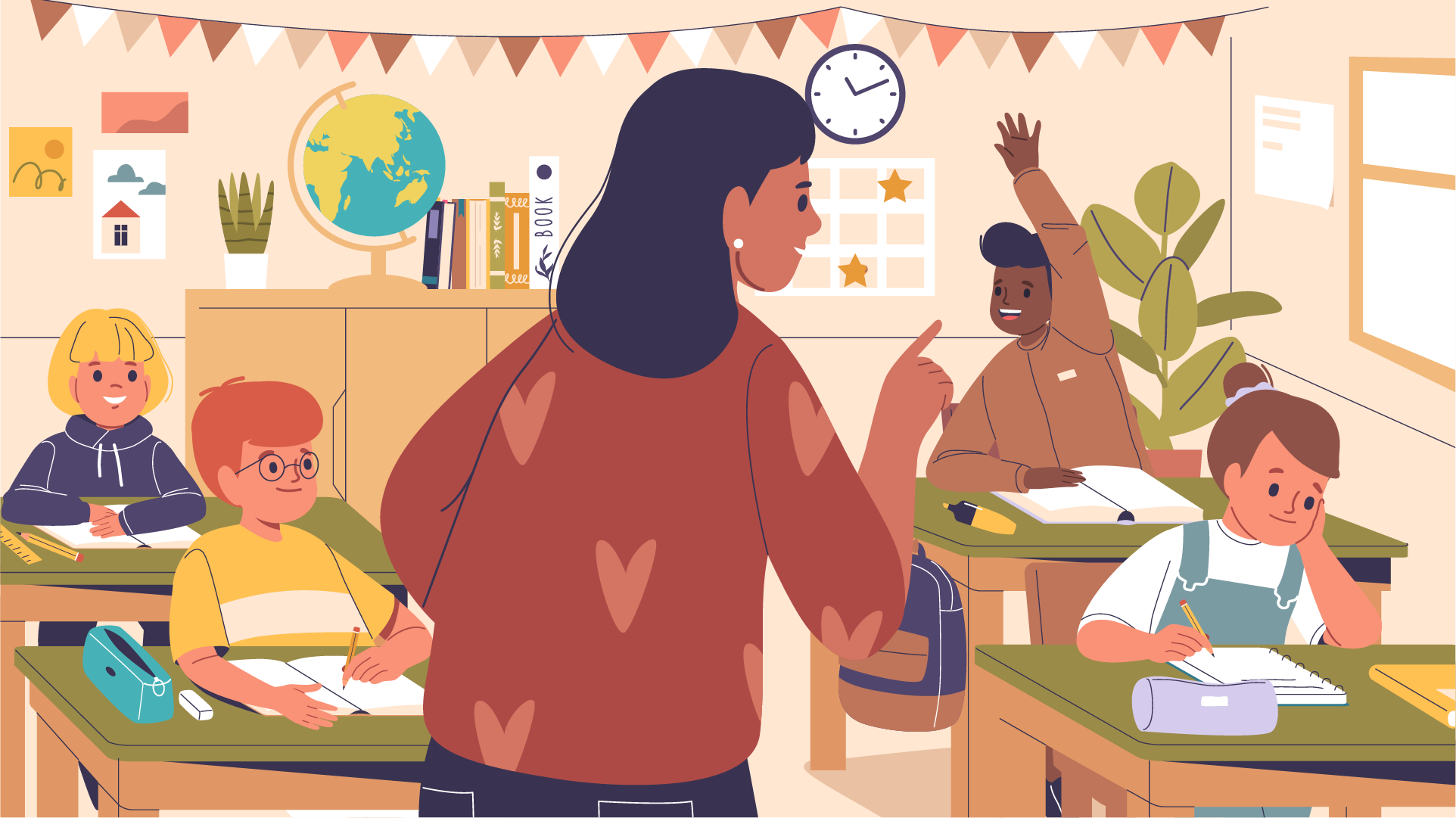
It’s not enough to just give people information; you also have to get them interested, help them stay interested, and give them confidence. Even the best-planned lessons don’t work without students who are motivated and ready to listen.
Explore the list of motivational strategies for students in classroom teaching to make learning in the classroom more fun and useful for the future.
Motivational Strategies for Students
Before we can talk about strategies, we need to know what motivation means in school. Psychologists typically categorize motivation into two categories: intrinsic and extrinsic.
- Intrinsic motivation comes from inside a student; they want to learn because they enjoy it.
- Extrinsic motivation comes from outside of the person, like grades, praise, recognition, or competition, and can motivate them.
A good teacher can do both things. People can be interested in something for a short time if they get rewards from outside sources, but intrinsic motivation keeps people curious and loving to learn for a long time. When students know that their ideas and hard work matter, they learn for themselves instead of for the teacher.
What are different motivational techniques in classroom teaching?
1. Making students care about you.
Building relationships is the first step to getting motivated. When students feel recognized by their teacher, they are more inclined to engage and put forth effort.
A teacher who remembers what a student is interested in, values their unique point of view, or helps them through hard times builds trust. Trust leads to motivation.
Saying hello to each student by name, asking about their hobbies, or giving them a moment of empathy are all little things that can make a big difference. When students know that their teacher cares about what they learn, they do too.
2. Making goals that are clear and possible.
Students often lose interest when they don’t know what to do next. They will be able to stay on track if you help them set clear, achievable, and measurable goals.
A teacher might say, “By the end of this week, let’s try to solve five word problems without hints” instead of “Get better at math.”
Students feel like they’re making progress when they break big tasks down into smaller ones. They keep going because they are proud of every step they take.
3. Creating a safe space for mistakes.
Fear of failure hinders creativity, while a motivating classroom environment encourages students to embrace mistakes as learning opportunities.
Teachers can show this by saying they made a mistake, laughing about it, and showing how every mistake is a step toward understanding.
If something goes wrong during a science experiment, a teacher might say, “That didn’t go as planned, but that’s how real scientists learn.”
These kinds of answers show students that tests aren’t the only way to learn.
4. Supporting independence and making choices.
Students are more intrinsically motivated when they have a say in their learning through choices, fostering a sense of responsibility and involvement.
It could be as easy as letting students choose what to study, how to show off their work (with a poster, video, or presentation), or what book to read next.
When students feel like they have a say, they feel like they own something, which makes them more likely to follow the rules.
Making learning matter.
When students know why they are learning, they are more likely to want to do it. Teachers can relate lessons to real-life events, careers, or personal objectives.
For instance, every day, we talk about how math affects the cost of living.
In literature, linking the theme of a poem to how students might feel.
In history, connecting things that happened in the past to things we deal with now.
What are different examples of motivational strategies in the classroom?
Strategies are more general, while techniques are the specific things teachers do every day to keep kids interested.
1. Using stories to teach.
Telling stories makes people feel things and use their imaginations, both of which are great ways to get them to do things. Using a historical story, a real-life scientist’s journey, or a personal story from the classroom can help make abstract ideas more concrete.
A physics teacher might use the story of Isaac Newton and the apple to teach about gravity, while a literature teacher might use the theme of a book to connect it to a real moral problem that students face.
Stories make learning more meaningful, important, and memorable.
2. Having fun while learning.
Gamification enhances learning by incorporating elements like points and rewards to increase participation and enjoyment, focusing on making learning fun and useful rather than turning it into a game.
Teachers might give students quizzes, learning apps, or “achievement badges” for things like “Creative Thinker” or “Problem Solver.”
Gamification shows you how far you’ve come, rewards hard work, and makes learning new things every day more fun.
3. Learning together and helping each other.
People can stay motivated and work together by doing projects together, talking about them, and getting feedback from their peers. Students get a lot of ideas from how creative and curious their classmates are.
When a teacher helps students work together, they learn how to get along with other people and talk to them, and they feel good about what they did together.
For instance, letting students work together on a science fair project or a debate competition lets them learn from each other and celebrate their success as a group.
4. Using technology to learn that you can use.
Using technology effectively can enhance students’ interest in school through interactive quizzes, virtual labs, visual simulations, and AI-based learning assistants, making learning more engaging and personalized.
Technology should never replace human connection, though. Instead, it should make it stronger. The best way to get people to do things is still to have a teacher who cares about them and tells stories.
5. Learning by thinking
When you make students think about what they’ve learned, they are more interested. Students can use journals, exit slips, or “reflection circles” at the end of class to think about what they’ve learned, see how far they’ve come, and figure out what they need to work on.
When students think about what they’ve done, they take charge of their own growth and make it feel like learning is something that happens all the time.
What are different examples of motivational strategies in the classroom?
Here are some real-life examples of how teachers use theory in their work:
- “Student of the Week” Instead of just giving prizes to the best students, praise things like being creative, working well with others, or not giving up. This makes the idea of success bigger and gives all the kids a boost.
- Learning contracts involve agreements between students and teachers regarding learning goals, expectations, and rewards for successful performance, fostering greater responsibility among participants.
- Questions to Make You Think: Start each lesson with a question or puzzle that makes people think, like “What would happen if gravity suddenly disappeared?”
- Classroom roles, such as leading discussions, managing supplies, or assisting with technology, enhance student involvement and accountability.
- Feedback boards provide students with a platform to anonymously share their feedback on lessons and teaching methods, fostering a sense of respect for teachers.
How to praise students in the classroom?
One of the easiest and best ways to get people to do what you want is to praise them, but you need to be careful how you do it. Generic or excessive praise may lessen its effectiveness, while specific and sincere praise can change how someone acts.
Pay more attention to the work than the results.
Say, “You did a great job on that problem—you worked really hard!” instead of “You’re so smart.”
Telling someone they did a good job helps them develop a growth mindset, which means they believe they can get better by practicing.
Be Clear When You Give Praise
“Good job” doesn’t mean much. But saying “I love how you used examples to back up your point” lets them know exactly what they did right, which makes them want to keep doing it.
Give feedback that is both good and bad.
Praise makes you feel good, but feedback helps you improve. A good balance makes sure that students learn and feel good at the same time. For instance, “You did a great job with the intro.” Now let’s make the end just as strong.
Being known in both public and private
Sometimes giving someone praise in public makes them feel better about themselves, and other times giving them praise in private keeps them from feeling bad. Teachers who are sensitive know when to use each one.
A quiet compliment after class can mean more than clapping in front of other students.
Get Other People to Compliment You
Students should also learn to value what others do. This makes the classroom feel like a community and gives it good energy. “Peer Shoutouts” and “Compliment Circles” are two things that can help kids be nice and stay motivated.
Final thoughts.
Trust, connection, and genuine motivation are crucial for effective teaching. Rather than relying on rewards or technology, teachers should listen, encourage, and inspire students, creating an environment where students feel valued and capable. This approach fosters a desire for personal improvement beyond just achieving good grades, highlighting the importance of teaching that nurtures both intellect and emotional well-being.




Leave a Reply