The world is very big, very old, and full of mysteries. When we look up at night, we see so many stars, planets, and other amazing things in space that it’s hard to believe. There is, of course, one basic question: Who made the universe?
The Big Bang, a massive explosion 13.8 billion years ago, gave birth to space, time, matter, and energy. However, the event raises questions about its origin, intelligence, and whether it spontaneously unfolded under natural laws.
A universal intelligence or consciousness is thought to be hidden behind the cosmic dance of particles and forces, according to philosophers and spiritual traditions.
Whether we refer to it as God, Creator, or the universal consciousness, the symmetry, order, and laws that govern the universe frequently inspire us to envision a guiding principle.
What are we made up of?
Look around you for a moment. Look at the chair, the air, and even your own body. Everything is made up of atoms at its very core.
But why atoms?
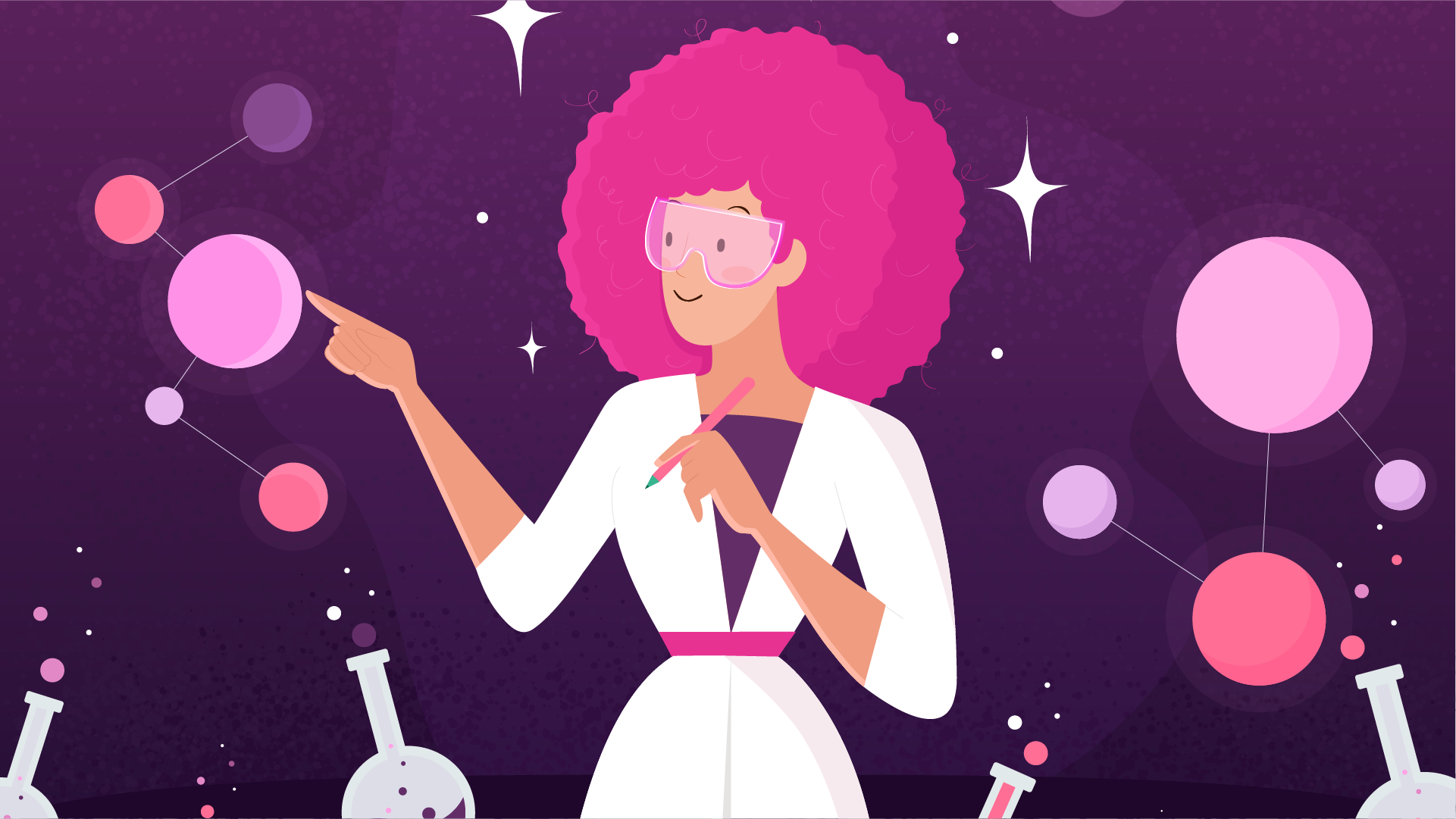
Atoms are the tiniest pieces of matter that still have the characteristics of elements. They have a core made up of protons and neutrons, and electrons move around it. Molecules, cells, and finally life itself are made from these building blocks.
The universe cooled down enough after the Big Bang so that protons and neutrons could join together to make simple chemical nuclei like hydrogen and helium. After billions of years, stars made stronger elements through nuclear fusion. When they exploded, they sent these elements flying through galaxies.
So, atoms are the building blocks of everything.
Language makes up an infinite number of meanings from a small set of letters, and the world does the same thing with these tiny building blocks.
Any and all matter, from rocks and water to trees and even our own ideas, is composed of atoms.
What made these atoms bind?
Atoms are the building blocks of matter, and energy is the binding agent of the universe. The rule of conservation of energy says that energy can only be transformed, not made or destroyed.
For example, photosynthesis converts sunlight into chemical energy, while our bodies convert food into kinetic energy. Nuclear fusion sustains life on Earth, while nuclear fission releases heat and radiation from atom splitting.
The world of molecules is connected to the universe through this constant change of energy. Every beat of your heart, every sunrise, and every supernova are all part of this endless circle of energy.
What happens to these atoms when someone or something dies or ceases to exist?
Think about stars as an example. They are amazing, but they won’t last forever.
One day, a star like our Sun will get bigger until it’s a red giant. It will then shed its upper layers and be left with a white dwarf. Supernovae are very bright explosions that happen when massive stars die. Their atoms are thrown into space, and sometimes they form neutron stars or black holes.
Theoretical evidence supports the claim that “energy can neither be created nor be destroyed but can be transferred from one form to another.”
This process is not death; it is recycling in space.
Carbon in your body, iron in your blood, and calcium in your bones were all made in stars a long time ago. We really are made of stardust in a way.
The ancient Indian vision of atoms and consciousness.
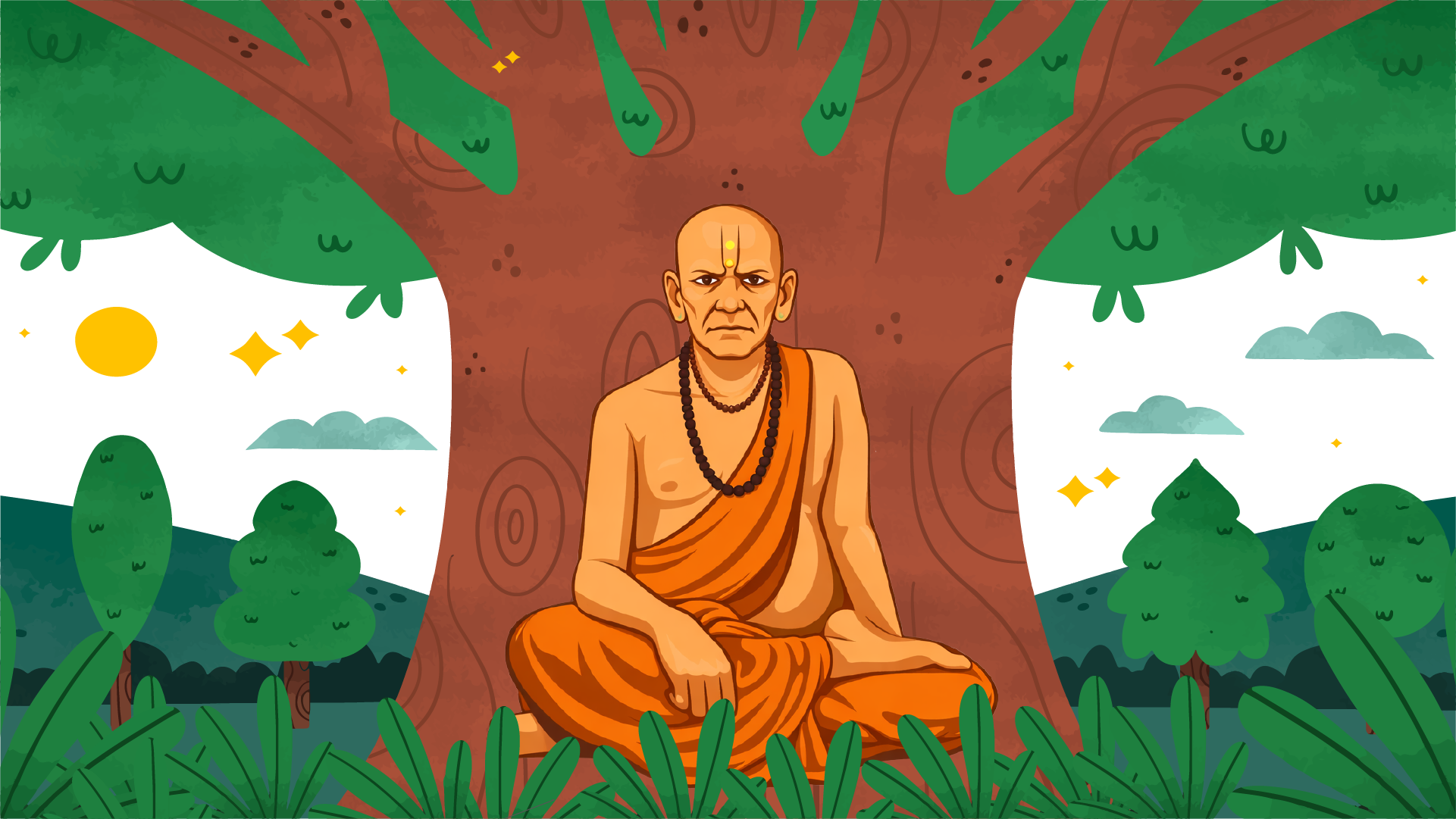
The underlying nature of matter was something that Indian sages pondered a long time before modern physics was developed. However, Indian philosophies pushed beyond the realm of substance to inquire into more profound concerns, such as “What about the Self?”
The Upanishads replied with a deep statement: “Aham Brahmasmi.” According to this idea, the unique self (Atman) is not different from Brahma, which can be thought of as the universe or the creator of the universe.
Aham Brahmasmi is a declaration of one’s inclusion in the cosmos.
Every form of consciousness ultimately boils down to the same universal source, just as all matter ultimately boils down to atoms.
It’s interesting how this is similar to modern science. Physics says that all matter is linked by atoms, and several religious scriptures says that all things are linked by awareness. Even though the languages are different, the ideas are eerily the same.
But how is everyone connected through atoms?
The atoms that make up your body used to be part of very old stars. They were floating through space before Earth was formed and then became a part of you.
Every time you take a breath, you are exchanging atoms with the surrounding air. Once upon a time, the water that you consume was circulated across rivers, clouds, and seas.
All of the food you consume is the result of plants absorbing sun energy. Given the interconnection of atoms, it may be concluded that there is no genuine distinction between you and the cosmos.
Do non-living things have consciousness?
Consciousness is often reserved for more complicated neural systems, such as the human brain, in scientific research. It is not possible to attribute consciousness to rocks, water, or atoms.
However, there are philosophical schools that contend consciousness might be an inherent quality of matter, such as panpsychism.
According to panpsychism, every material object, no matter how insignificant, contains a spark of individual consciousness.
It’s just a guess, but it makes us think about how clear the line is between “living” and “non-living.”
The field of modern physics is still investigating quantum puzzles, which have the potential to transform our understanding of consciousness and matter sometime in the future. Up until that point, the discussion is still both open and intriguing.
Does the logic of science conform with spirituality?
The realization that we are essentially energy and atoms, perhaps linked through consciousness, alters our perception of ourselves.
The study of atoms is what enables science to provide us with technology, medicine, and nanoscience. By investigating consciousness, spirituality provides us with practices such as meditation, yoga, and mindfulness.
The consciousness that you have in your mind and the atoms that make up your body are not unique to you; rather, they are a component of the larger global whole.
Both science and spirituality appear to be in conflict with one another, yet here they come together in a lovely way.
Final thoughts:
The universe is a complex structure of atoms, energy, and consciousness, bound by the same laws of matter and energy. We are not isolated beings, with our atoms and consciousness being a spark of the universal whole. Recognizing this unity inspires awe, humility, and a deeper connection to all existence.