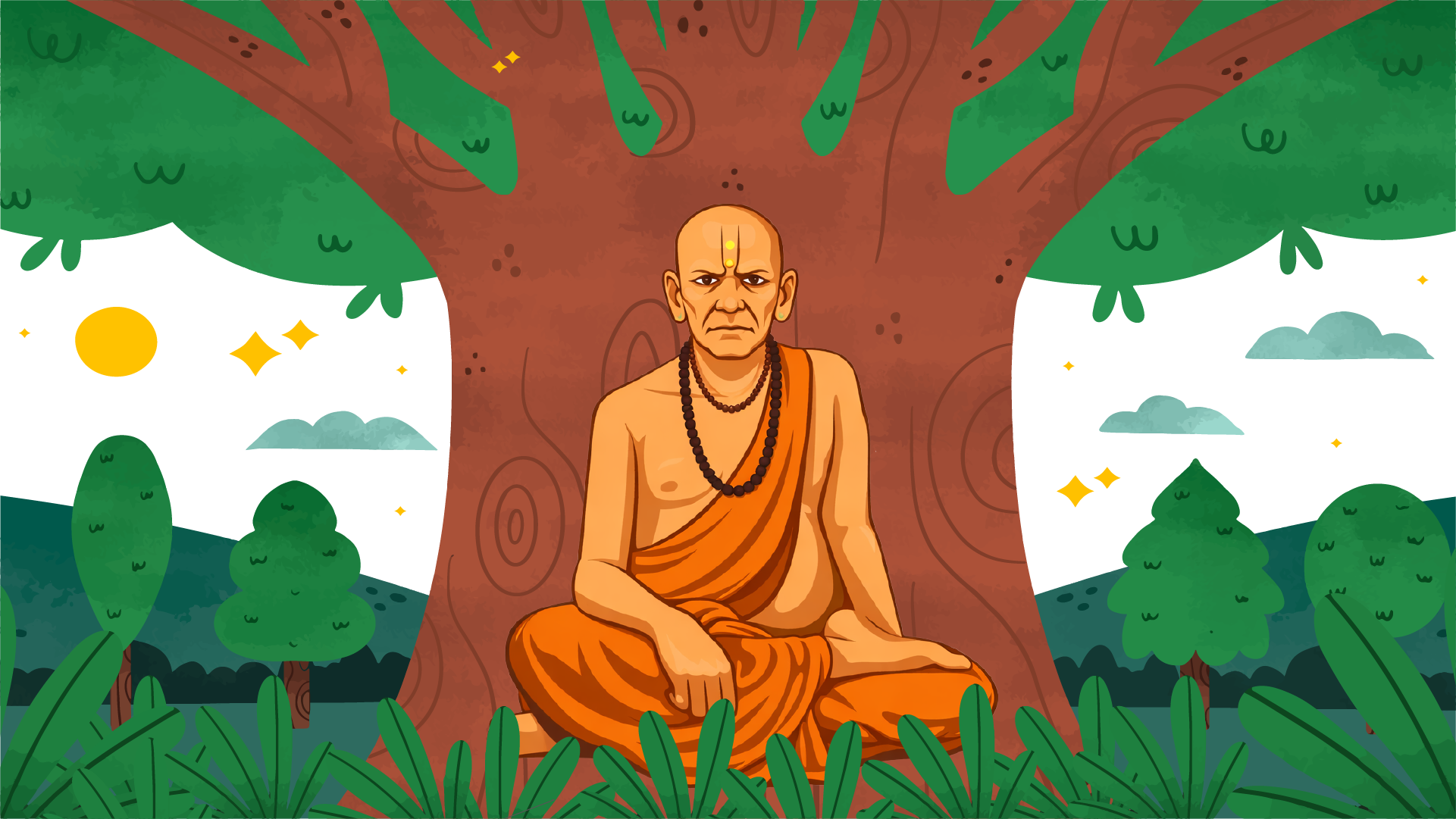
The idea of “Tapovan” occupies a unique position in Indian philosophy, literature, and geography, infused with spiritual resonance and profound cultural roots.
Penance, meditation, and harmony with nature are core tenets in ancient Indian literature, encapsulated in the symbol of Tapovan. This concept traces its roots back to the Vedic era, highlighting its significance as a spiritual retreat and tourist destination, while offering valuable insights into the evolution of Indian civilization and its connection to the environment.
Read what “Tapovan” means and history of ancient forests that were used for meditation in India.
What does “Tapovan” mean, and where did it come from?
The Sanskrit words “tapas,” which means “penance” or “spiritual practice,” and “vana,” which means “forest,” are where the name “Tapovan” comes from. When you put the two words together, Tapovan means “a forest of spiritual practices.”
Tapovans used to be quiet groves or forested areas where people could meditate, study, practice austerity, and follow religious rules. Most people weren’t allowed to go into these sacred groves, which were home to sages, ascetics, and rishis who wanted to attain spiritual enlightenment by being alone, being very strict with themselves, and living close to nature.
The rise of Tapovans in ancient India
The concept of Tapovan originated in the formative period of Indian civilization, evolving through oral traditions, spiritual practices, and the experiences of hermits and sages. People believed that the forests, which were thick, dark, and full of life, were good places to get food, wisdom, and spiritual inspiration. Tapovan became a perfect place that stood for the spiritual search for truth, simplicity, and finding oneself.
Since prehistoric times, forests have been a big part of Indian life. They were not only places where people could learn but also places where they could be free and unique.
Rabindranath Tagore wrote an important essay called “Tapovan” in which he discussed how Indian civilization grew out of the forest and took in its ideas of freedom, diversity, and balance. The forest wasn’t just a place; it was also a symbol of finding new ideas and higher knowledge.
Tapovan in the Aranyakas
The Vedic texts are the oldest written records of Tapovan. Usually, they talk about sacred groves and hermitages in the forest. Vedic philosophy recognized three primary types of forest: Mahavan (great natural forest), Shrivan (forest of prosperity), and Tapovan (forest of penance). People thought of Tapovan as a sign that a village was spiritually whole and dedicated to keeping the sacred connection between people and nature.
The Aranyakas are a type of Vedic literature that was written for people who wanted to learn about spirituality while living in the woods. The word “Tapovan” isn’t always used in these texts, but the ideas in them are very similar. People who had left their villages to seek enlightenment in nature were supposed to do rituals and meditate.
The Aranyakas link the Brahmanas’ external rituals to the Upanishads’ internal philosophy. They talk a lot about how important it is to escape away from the world and think in natural solitude, which is a practice that is very similar to Tapovan.
List of historical Tapovans before invasions in India.
Before foreign invasions and the social and political changes that followed, India had many Tapovans, each connected to a different sage, tradition, or mythological event.
Historical records, folklore, and inscriptions on copper plates show that Tapovans were spread out over a large area, including Uttarakhand (Gaumukh Tapovan), Maharashtra (Nashik Tapovan), and along the banks of rivers that are important to Hindus.
The Tapovan in Nashik, Maharashtra, is an important spiritual site and an epic landmark because it is where Lord Rama, Sita, and Lakshmana were exiled. There were other Tapovans along the Ganga, in Rishikesh, and in high Himalayan valleys where sages like Vyasa and Agastya meditated.
It is impossible to say exactly how many Tapovans existed in India before waves of invasions and colonization changed the country’s spiritual geography. But historical records and local stories say that there were dozens, if not hundreds, of them. As cities grew and forests were cut down, many of these places became monasteries or temple complexes or just faded from memory.
Today, Tapovan remains a popular destination for tourists.
Modern India still attracts people seeking the mystical beauty of Tapovan.
Changes in the environment and the growth of cities have destroyed a lot of the original forest cover, but many Tapovan sites are still open to the public. Visitors can enjoy the unique spiritual and natural setting.
Gaumukh Tapovan in Uttarakhand
One of the most well-known Tapovans is Gaumukh Tapovan in Uttarakhand. At the foot of the Bhagirathi peaks, it is a meadow at a high altitude. People come from all over to see the beautiful views, breathe the clean air, and feel the spiritual energy in it. Trekking paths that lead to Gaumukh Tapovan attract people seeking to meditate, perform penance, or simply appreciate the beauty of nature.
Tapovan in Nashik, Maharashtra
Tapovan, a historic retreat in Nashik, Maharashtra, surrounds itself with temples, meditation facilities, and the well-known Panchavati region from the Ramayana. People can meditate under old trees, walk along the riverbanks, and visit shrines that keep traditions alive that have been around for hundreds of years.
Tapovan is in Rishikesh, Uttarakhand.
This Tapovan is near the famous Lakshman Jhula and Ram Jhula bridges. It draws in people who love yoga, are looking for spiritual growth, and want to travel in an environmentally friendly way.
Other well-known tourist attractions in Tapovan include
- The Tapovan Tourist Complex in Dadra and Nagar Haveli has gardens and places to meditate and is not far from the Tadkeshwar Shiva Temple.
- Himalayan Tapovan is a well-known spot for trekkers, photographers, and people who want to connect with their spiritual side. It is close to Mount Meru and Shivling.
The community in the Western Himalayas maintains smaller sacred groves, upholding Tapovan tradition as a place of worship and the natural world. These groves merge spirituality, natural beauty, and living history, providing spaces for reflection, relaxation, and connection to India’s ancient culture.
The significance of these Tapovan locations in modern India is profound.
The message of Tapovan will never go out of style: live simply, peacefully, and with purpose. That’s why it’s still important today.
The Tapovan ideal asks society to rethink its priorities as environmental problems and modern stresses become worse. It does this by using the wisdom of wise people who lived in the woods and valued inner peace over money.
Rabindranath Tagore and other well-known people used the Tapovan model to make modern changes to education and philosophy. He built Santiniketan to try to bring back the spiritual and creative energy of a forest school, where students and teachers could learn in a beautiful place.
These kinds of projects show us that Tapovan is more than just an old building; it is also a living example of how to live in a way that is advantageous for the environment, learn in a way that is advantageous for the whole person, and attain spiritual fulfillment.
Final thoughts.
Each Tapovan site embodies a connection to India’s cultural heritage, promoting penance, harmony, and self-discovery. These sites serve as places for meditation and transformative journeys, as India revitalizes the Tapovan concept, focusing on the preservation of both its forests and its civilizational essence.