

When we gaze at the night sky, we often wonder if there are other worlds we can’t see, either inside or outside our universe. In modern physics, this is called the multiverse or parallel universes. But long before this idea was talked about in science, wise people in ancient India were already making maps of a cosmic hierarchy of existence called “Lok.”
Hindu cosmology posits that the universe is not a singular, flat plane but rather a vast, multidimensional construct, replete with both visible and invisible realms. In Sanskrit, the word “Lok” (लोक) means “world,” “plane,” or “realm.” These worlds are more than just places; they are also states of mind, moral levels, and spiritual levels.
The Puranas and Upanishads say that there are fourteen Lokas, or realms. Seven of these are higher realms (called Vyahrtis), and seven are lower realms (called Patalas). They show a huge, cosmic staircase of existence, from the most material attachments to the most spiritual awareness.
Explore how many Lokas exist in Hinduism and their spiritual significance, revealing cosmic realms and ancient parallel universe ideas.
How many lokas are there in Hinduism?
Hindus believe that the universe is made up of three main areas: the upper lokas, middle lokas, and the lower lokas.
Divine beings live in the upper lokas, higher planes of existence, while humans experience karma in the middle realm (Bhuloka). The lower lokas signify places of darkness, illusion, and karmic bondage.
Each Lok is a level of consciousness and spiritual growth.
Let’s explore each of these cosmic realms. Each one shows how the mind works and how the soul moves toward or away from enlightenment.
The Seven Higher Loka (Vyahrtis)
1. Satyalok (सत्यलोक)—The place of absolute truth.
Satyalok, the highest of all Lokas, is at the very top of existence. It is where Lord Brahma, the creator of the universe, lives. Satya means “truth” or “reality,” and Satyalok is said to be a place where absolute truth rules, beyond illusion, birth, and death. In this place, time doesn’t move like it does in our world. There is no aging, sadness, or decay.
People say that souls who ascend to this level have let go of all their desires and karmic ties. They are in a state of pure consciousness, free from the physical world. People say that the light of Satyalok is so bright that it outshines a thousand suns. But it’s not a light that burns; it’s a light that wakes you up.
For people who are looking for spiritual growth, Satyalok is the ultimate freedom from the cycle of reincarnation, or moksha. People today might consider this to be the “source field” or “singularity,” which is the highest level of existence from which all other realities come.
2. Tapolok (तपोलोक)—The place of meditation and austerity.
Tapolok is a world below Satyalok where legendary sages and ascetics live. They have mastered the art of meditation and self-control. Tapa (तप) means spiritual heat, discipline, or spiritual intensity. This Lok symbolizes the internal cleansing process.
Beings in Tapolok are often called “formless” who meditate for a long time and create spiritual energy that keeps the universe going. They are beyond the pull of material desires, but they aren’t yet part of the absolute truth. Think of Tapolok as the “lab of the universe,” where discipline and devotion help consciousness get better.
This Lok reminds modern readers of the idea of higher vibrational frequencies or higher levels of awareness. The more one cleanses the mind and heart, the nearer one approaches this domain of fiery tranquility.
3. Janalok (जनलोक)—The Place of Beings and Knowledge
Janalok is the residence of Brahma’s mind-born sons, the “manasaputras,” created from his intellect rather than through physical means. The notable sages, or kumars, such as Sanak, Sanandan, Sanatan, and Sanatkumar, embody eternal knowledge.
The word “Jana” (जन) means “beings” or “people.” It stands for the creative intelligence that shows up as consciousness. People perceive the world as populated by divine beings engaged in thought and creativity rather than action, viewing it as a stage where knowledge transforms into wisdom and intellect harmonizes with intuition.
In a way, Janalok is like the modern idea of the collective consciousness, which is a place where ideas, new things, and universal wisdom can all flow freely. Souls who reach this level live in eternal happiness, unaffected by events in the world, and see creation as a divine play.
4. Maharlok (महर्लोक)—The great realm of seers.
Maharlok, also known as the “Great World,” is where legendary sages like Markandeya Rishi resided throughout Brahma’s lifetime. This world is in between the material and the spiritual, and it connects heaven and the absolute.
People say it is calm, full of golden light and vibrations of deep peace. Souls here are very close to being detached. They may still interact with lower realms, guiding humans and other beings toward higher wisdom. When cosmic dissolution (Pralaya) happens, the people of Maharlok move to even higher Lokas, which shows that they control both time and rebirth.
Every spiritual aspirant strives for a state of profound awareness of existence without becoming entangled in it, which is what Maharlok represents philosophically.
5. Svarlok or Svarga (स्वरलोक/स्वर्ग): The celestial heaven.
Svarlok or Svarga, ruled by Indra, the king of the Devas, is the heaven that most people know about. It is a place of joy, music, beauty, and heavenly pleasures. Svarga rewards people for their good deeds, sacrifices, and virtuous actions on Earth with a brief stay.
However, the duration of Svarga is not infinite. When a person’s good karma runs out, their soul has to come back to Earth to keep going on its journey. In that way, Svarga teaches a deep spiritual truth: even pleasure is only temporary unless it comes from freedom.
It’s like a long vacation for the universe, a place for souls to rest before they continue their cycle of growth. In modern metaphor, it resembles an energetic dimension of joy and harmony, parallel to Earth but beyond physical suffering.
6. Bhuvarlok (भुवर्लोक)—The middle realm.
Bhuvarlok is the space between Earth (Bhulok) and Heaven (Svarga). It is home to semi-divine beings like Gandharvas (heavenly musicians), Siddhas (realized souls), and even some strong spirits.
You can think of this Loka as the astral plane, which is a place of subtle energies and feelings. People say that when they dream or meditate deeply, their minds briefly touch this realm. In this world, thought shapes form, and vibration determines visibility.
In ancient indian scriptures, Bhuvarlok is also the protective layer that surrounds the Earth. It is full of cosmic energies that keep the forces of light and dark in balance. It reminds us that not everything that exists can be seen and that consciousness goes far beyond physical limits.
7. Bhulok (भूलोक)—The world of the earth.
Bhulok is the realm of human existence. Here, souls are born into bodies so they can learn, grow, and evolve spiritually through the effects of karma.
Bhulok may seem like a normal place, but it is exceptional. It’s the pivot, the place where the higher and lower Lokas meet. From this point, a soul can either rise toward freedom or fall into ignorance and attachment.
Every happiness, sadness, problem, and relationship on Earth is a chance to learn spiritually. Hinduism sees life on Earth as a chance to grow, balance karma, and become ready for higher journeys, not as a punishment.
What are the seven lower loks or paatals?
People often think of the lower realms as “hells.” In reality, they are signs of spiritual ignorance and material obsession. The Vishnu Purana and Bhagavata Purana paint a beautiful picture of them as dark, vibrant worlds full of snakes, demons, and magical creatures.
Each realm signifies internal human conflicts such as ego, greed, and delusion, highlighting the significant decline into illusion when disconnected from truth.
1. Atallok (अतललोक) – The Realm of Illusory Pleasures
According to legend, the demon Bala rules over Atalalok, a place of sensory pleasures and attachment to things. People here have many luxuries and physical pleasures, but they are still slaves to them.
Spiritually, it represents the human condition when pleasure becomes addiction, where the mind seeks satisfaction externally but never finds peace. It’s a reminder that indulgence without awareness leads to bondage, not happiness.
2. Vitallok (वितललोक)—The world of energy and pain.
Hara-Bhava, a part of Shiva, is the god who rules over the fiery realm of Vitalalok. It has rivers of molten metal and energies that flow through it, which stand for the pain that comes from abusing power and health.
This Loka represents souls burdened by greed, jealousy, and the misuse of creative power. But in this pain is change—the fire that cleanses. Vitalalok is not just a punishment; it is also a cosmic forge where bad energies are burned away to get souls ready for renewal.
3. Sutallok (सूतललोक)—The place where the kind demon king Bali lives.
Sutala is different from other lower worlds. The demon-king Mahabali rules over this kingdom. He is known for being humble and devoted. After losing to Vishnu in his Vamana form, Bali received this realm as his home and Lord Vishnu’s personal protection.
This Loka is a paradox that shows how humility can save pride by combining power with surrender. Sutala is said to be more beautiful than Svarga, even though it is technically below the Earth. This shows that true greatness is spiritual, not positional.
4. Talatallok (तलाताललोक)—The dark realm of magic.
The demon architect Maya is in charge of Talatala, a place where illusions and dark magic are common. People here know a lot about technology, magic, and how to control things. It is a place where people use their brains but not their wisdom.
Talatala warns that intelligence without morals can be dangerous. It is like societies that are obsessed with power and control and forget about compassion and balance.
5. Mahatallok (महाताललोक)—The land of snakes.
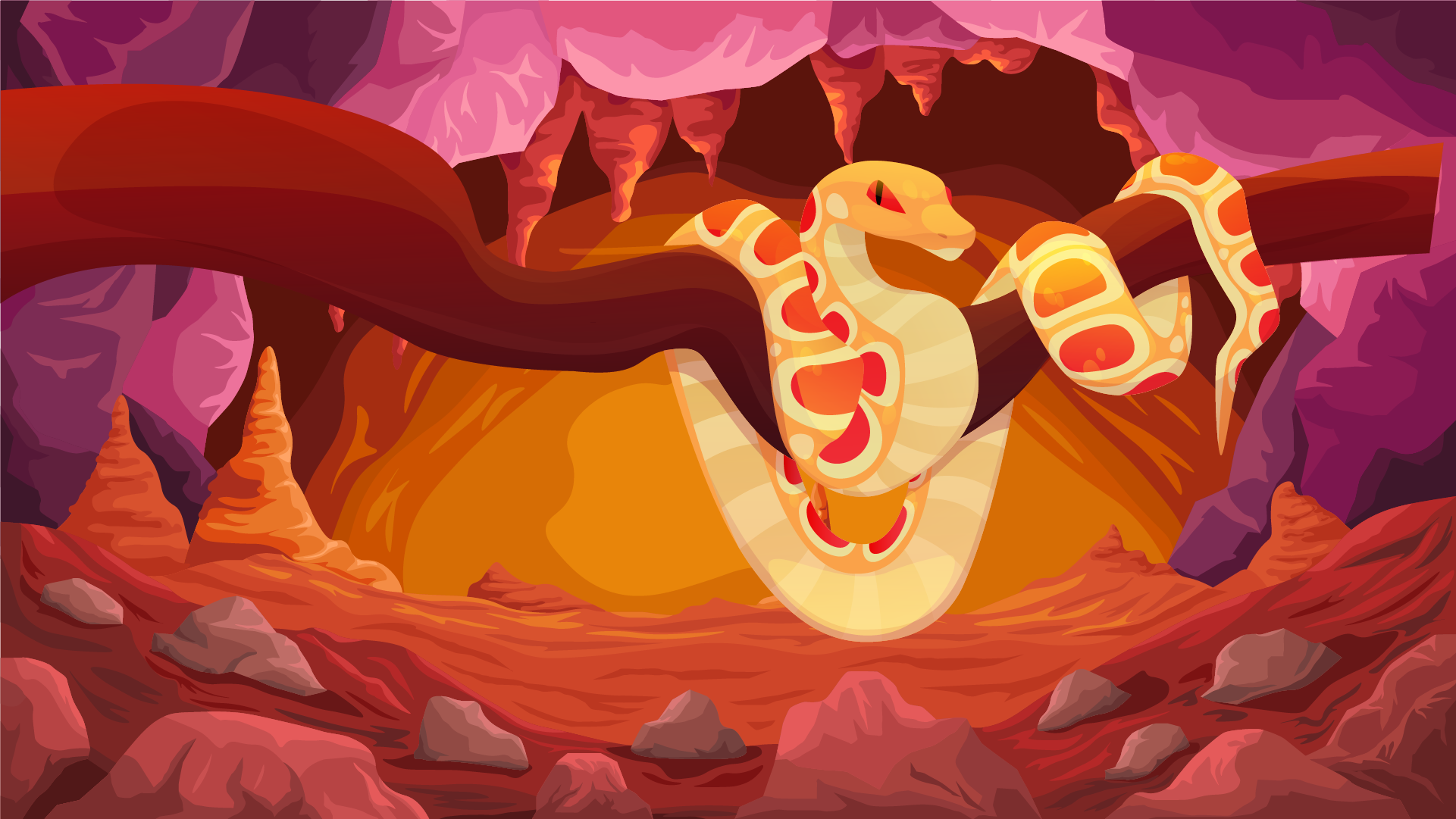
The great serpents (Nagas) and beings of great strength and secrecy live in Mahatalaloka. The snakes symbolize ancient wisdom and dormant spiritual energy (Kundalini), yet in this instance, this power remains untapped due to ignorance.
This world shows what everyone is capable of, which can be dangerous if not used correctly. It cautions against allowing fear or ego to stifle spiritual energy.
6. Rasatallok (रासातल)—The place of war and disorder.
Mighty Asuras and Danavas, who are full of hate, pride, and violence, live in Rasatala. There are always fights going on here, just like the chaos of an uncontrolled ego.
This Loka represents a state of consciousness that is full of conflict, both inside and outside of oneself. The soul is lost in endless competition and has forgotten where it came from.
7. Patalalok (पाताल)—the deepest realm.
Patala, also known as the underworld, is at the bottom. It is home to snakes (Nagas) like Vasuki and Takshaka. Patala, on the other hand, is described as beautiful, with bright gems that light up its depths. This view is different from the Western idea of hell. But underneath this beauty is spiritual darkness: a complete attachment to materialism.
Patala is the lowest level of awareness, where the soul completely forgets its divine nature. But even here, there is a divine presence—Lord Vishnu, in his form as Ananta-Shesha, rests here, showing that consciousness is always present.
Final Thoughts
The 14 Lokas doctrine encapsulates Hindu cosmology, depicting a universe rich with life and consciousness at various levels, each reflecting the spiritual and karmic essence of its inhabitants. Each Loka plays a significant role in the cycle of birth, death, and spiritual evolution, such as Bhulok, the realm of humans, and Satyalok, the pinnacle of truth.
Understanding the Lokas encourages ethical living, the pursuit of spiritual wisdom, and the quest for liberation from the material world, enriching one’s comprehension of the unity between the cosmos, soul, and divinity in Hinduism.


Leave a Reply