On the third day of Navratri, the festival honors Goddess Chandraghanta. She is a one-of-a-kind, transformative version of Parvati who represents the union of warrior energy and calm compassion.
The story of Chandraghanta comes from the struggle between light and dark, the need for bravery in the universe, and the promise of divine protection that will last forever.
The dusk before the dawn: The beginning of Chandraghanta.
The story of Chandraghanta starts with Parvati’s love for Shiva and their marriage. This is a central story that is told in many different ways in the Puranas and in temple myths all over India. After many lifetimes of penance as Brahmacharini, Parvati’s wish comes true when Shiva agrees to marry her. This event is not celebrated with fanfare but with dread.
Shiva, who is always giving up things, comes to his wedding in a scary form. Instead of happy gods, he is surrounded by wild ascetics, ghosts, and scary beings. Menavati, Parvati’s mother, faints from fear of her daughter when she sees Shiva with his messy hair, snakes, and scary body.
It is at this point, as described in the Durga Saptashati and retold by the Markandeya Purana and Skanda Purana, that Parvati becomes a new version of herself and instantly changes into Chandraghanta.
She has a crescent-shaped bell on her forehead that looks like gold and shines. She gives off both supreme peace and readiness for war. Her aura brings peace and strength to the palace, calming Menavati and convincing Shiva to take on a gentler, more charming form for the wedding.
The meaning and Vedic resonance of the crescent bell.
The half-moon bell on Chandraghanta is not just for show; it has a lot of spiritual meaning. The bell is the traditional tool for getting rid of bad energy. Its sound is a sign of awakening, vigilance, and getting rid of evil from the devotee’s path.
The crescent moon, on the other hand, is a symbol from the Rigveda and Yajurveda that goes back to ancient times. It stands for divine knowledge and cosmic order.
Therefore, the third day of Navratri represents Parvati’s transition from passivity to active protection, demonstrating her preparedness to confront life’s challenges with both elegance and fortitude.
In Yogic texts, the Manipura Chakra is associated with Chandraghanta. It is the fire of change that burns within the spiritual seeker and manifests as the inner strength and foresight of a warrior.
The story of Jatakasur.
Jatakasur was a strong bat-demon that the demon Tarakasura sent to attack Mount Kailash, where Goddess Parvati lived after she married Lord Shiva. According to Puranic texts (like the Shiva Purana) and local stories that are told in many Navratri traditions, Jatakasur and his army of bats caused trouble around Kailash.
When Parvati was scared and asked Nandi for help, Shiva told her to wake up her inner power because she is Shakti. With the help of the Moon God Chandradev, who lit up the battlefield, and a pack of wolves who fought the bats, Parvati took on the form of Chandraghanta, with a crescent moon on her forehead and a bell in her hand to drive away the darkness.
She killed Jatakasur by hitting him in the head with the bell and stabbing him in the chest with a sword after a long fight. This story is about the goddess Chandraghanta and shows how light wins over darkness.
The Puranas talk about the victory over Mahishasura.
The story of Chandraghanta takes place on a battlefield where the demon Mahishasura has defeated the gods and is about to kill them all. The Devi Purana and Durga Saptashati tell a fascinating story about how Brahma, Vishnu, and Shiva create a goddess who is very powerful.
She has divine weapons like Shiva’s trident, Vishnu’s chakra, Indra’s thunderbolt, Surya’s rays, and a bell that is meant to break the hold of evil.
Chandraghanta rides a lion that Surya gave him to fight Mahishasura’s army. Her bell rings out across the realms, scaring demons away and giving heavenly warriors new life. With her ten hands, each holding a symbol of justice—a trident, sword, lotus, bow, arrow, and japa mala—she moves gracefully, bringing order and getting rid of chaos all around her.
The Durga Saptashati tells the story of her fierce battle: with each chime of her bell, countless demonic spirits weaken, while the goddess cuts through Mahishasura’s forces, ensuring victory and bringing back harmony and spiritual balance.
In some versions of the Skanda Purana and Shiva Purana, this moment marks the birth of Chandraghanta’s half-moon bell, which she uses to get rid of anything that disturbs her spiritual peace. The gods celebrate her as the one who brings justice and restores balance to the universe.
The dual nature of Chandraghanta as a warrior and a peacekeeper.
Chandraghanta is a perfect balance. She is ready to fight, but she also gives blessings and fearlessness with her two hands, while others hold their weapons.
The Markandeya Purana shows her as having a warm golden glow. Her lion, which is always moving, reflects her lively spirit. Even in the middle of a battle, people who follow her say that her presence brings them a deep sense of peace.
The sound of her bell is very important. In ancient temple rituals and Tantric texts, ringing bells before a deity is thought to be a way to call on her energy. The bell gets rid of bad thoughts, harmful energies, and spirits that won’t go away.
The symbolism is present throughout the Upanishads and various Vedic hymns, where “dhvani” (resonance) signifies spiritual awakening and the dispelling of ignorance.
Citing the Scriptures and Doing Rituals
The goddess’s story and pictures come straight from the Durga Saptashati, the Markandeya Purana, and the Skanda Purana. The Shiva Purana talks about her being married, and the Vajasaneyi Samhita and Yajurveda’s yajnas honor her warrior side and the crescent moon symbol.
This day is all about celebrating with bright yellow and gold, which stand for happiness, bravery, and that inner spark. It’s also a time to give and receive beautiful lotus flowers and tasty milk-based sweets. People who want her blessings chant “Om Hreem Kleem Shreem Chandraghantayai Namah.”
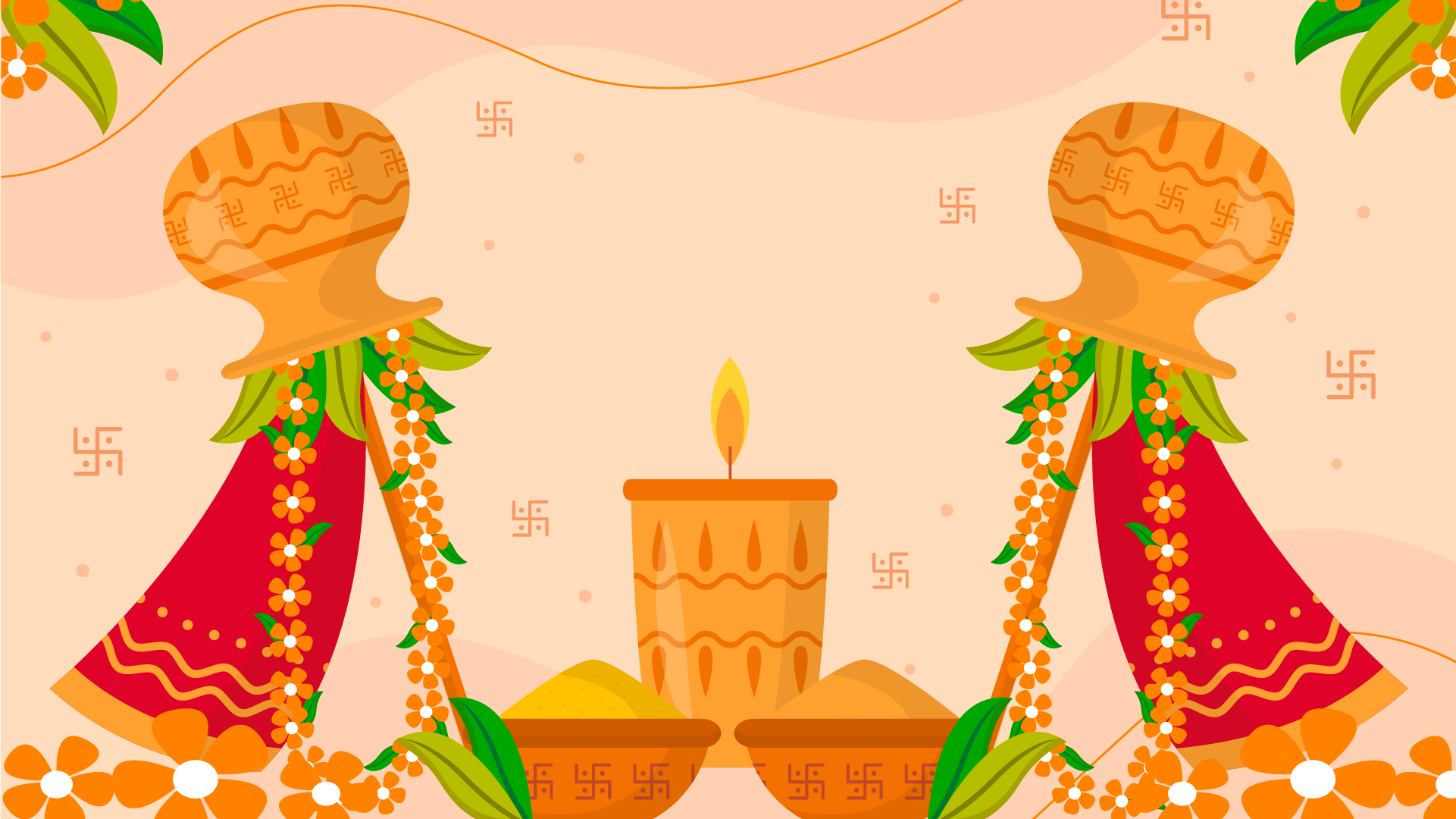
The clay pot filled with grains, water, and mango leaves is a reflection of ancient Vedic rituals meant to bring forth shakti. This arrangement is intentional; it is a reenactment of the original act of creation that stirs the divine energy within each devotee.
The light of Chandraghanta and inner battles.
There are many epic wars and celestial conflicts in the stories about Chandraghanta, but her true essence tells her followers to see her as the inner warrior who helps us face our doubts, negativity, and hidden fears.
The Markandeya Purana says that after she beat Mahishasura, Chandraghanta promised both gods and people that her bell would always ring in the hearts of the faithful, driving away darkness and giving them a chance to start over.
The Upanishadic and yogic traditions say that her day of worship is the highest point of the Manipura Chakra. It is a time when spiritual discipline turns into courage and fear is replaced by a sense of active peace. Today is a time to think about the past and look to the future. The problems we’ve faced have made us stronger so we can face what’s next with hope and peace.
Why people celebrate Chandraghanta on day three of the Navratri festival?
The meaning of Navratri’s symbols is revealed in a thoughtful way.
On day 2, Brahmacharini represents a sense of honesty and self-control. On day 3, Chandraghanta represents how that self-control can be turned into meaningful action.
Chandragnahta’s story is a reminder that even the calmest people sometimes need to put on their armor to protect what they care about. It’s a gentle reminder that it’s time to go from just watching to taking part. The bell, the lion, and the golden glow all gently remind us that strength and kindness go hand in hand.
On this day, her blessings are recognized for helping people overcome the obstacles in their hearts and minds. The seeker who calls on Chandraghanta finds the strength to lead, the courage to keep going, and the wisdom to stay calm when things get tough.
Chandraghanta’s lasting presence.
In every story, from the Durga Saptashati to the Skanda Purana, Chandraghanta shows up when people really need her. She shows up when warriors are called to make peace and when the gentle need the strength to be brave. People pray to her not only in Indian temples but also whenever a devotee wants a mix of courage and trust and love-filled action.
During Navratri, her bell rings out across time, filling homes and hearts. It stands for protection and the victory of light. It makes the comforting promise that the Divine Mother is always there for everyone who seeks her—ready, shining, and full of love.