The fifth day of Navratri is for Goddess Skandamata. Her name means “mother” in Sanskrit, and she is the mother of Skanda, also known as Kartikeya. He was a brave warrior who led the divine armies against the demon Tarakasura.
People look up to Skandamata not only as a symbol of a mother’s love and protection but also as a source of wisdom, courage, and spiritual happiness. Her worship on this holy day gives her followers blessings of strength, wealth, and freedom (moksha), which are very important in ancient Hindu texts and stories.
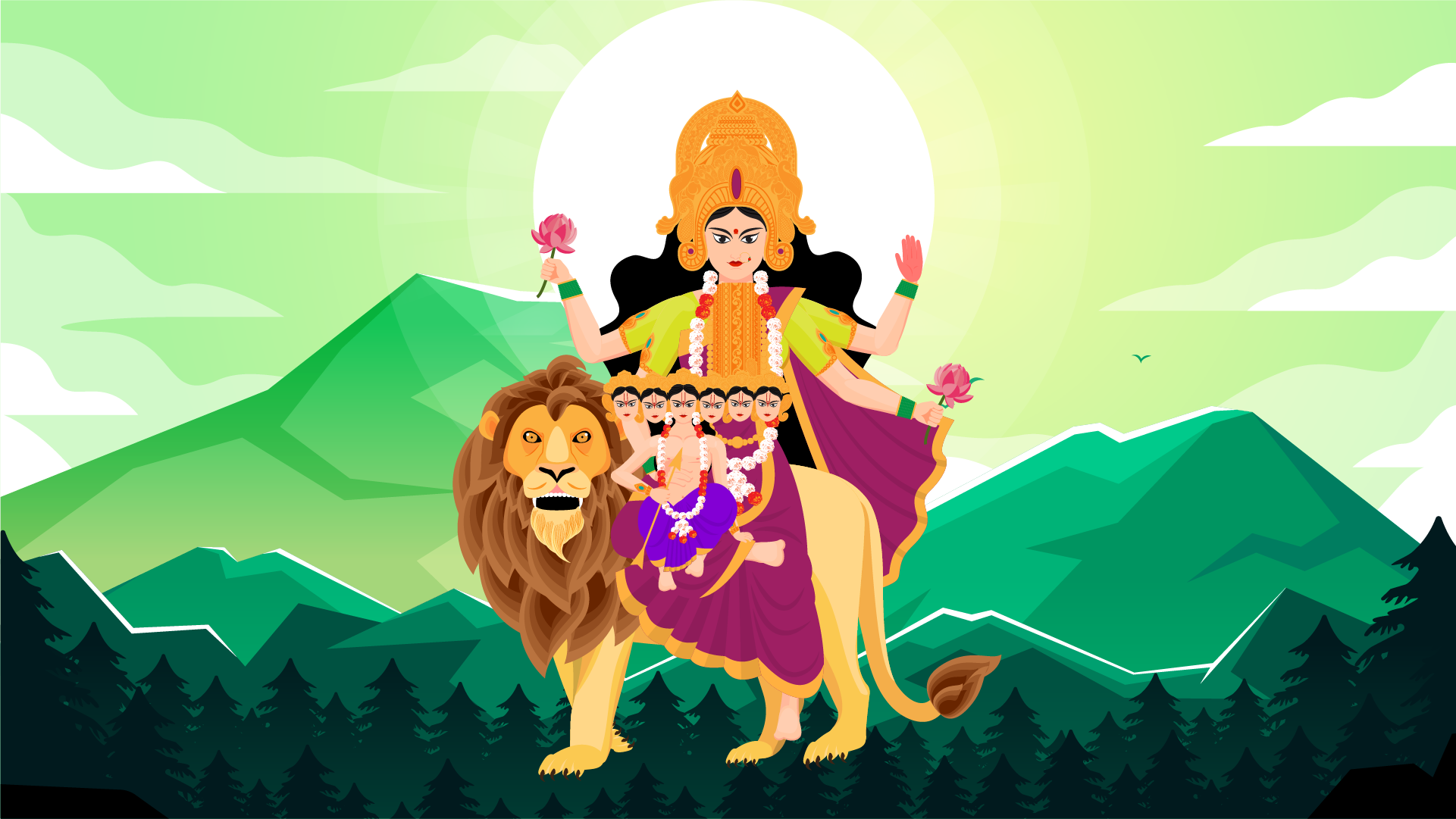
Skandamata, a radiant goddess, is often depicted serenely on a lotus, symbolizing purity, spiritual awakening, and consciousness unfolding amidst the worldly mire. The mother holds her baby, Kartikeya, symbolizing motherly love and divine power, with her four arms and holding lotuses, symbolizing beauty, fertility, and nobility. She blesses her followers with fearlessness in her lower right hand, while cradling Skanda in her lower left hand, promising protection and care.
Her vehicle is the lion, which represents courage, tenacity, and doing the right thing. She bestows these qualities on her followers, enabling them to overcome life’s obstacles with courage and insight. Green is the color that people use to worship Skandamata. It stands for new growth, harmony, and vitality, which is the same kind of energy she gives to her followers.
The godly beginning of Skandamata and her son, Skanda.
The stories of Skandamata and her son Skanda, who is very important in Hindu mythology, are two sides of the same coin. The Markandeya Purana (which contains the Devi Mahatmya), the Shiva Purana, and the Skanda Purana are all old books that tell the story of the gods’ fight against the demon Tarakasura.
Tarakasura performed severe austerities (tapasya) to earn a blessing from Lord Brahma that he could only be killed by Shiva’s son. At that time, Shiva was deeply involved in ascetic meditation, mourning and detaching himself from his first wife Sati’s self-immolation. There was no chance of a son, which put the universe in great danger.
The gods couldn’t defeat Tarakasura on their own, so they begged Parvati, Sati’s reincarnation and the dutiful daughter of the Himalayas, to win Shiva’s heart and have his son. Parvati went through a lot of hard work to become pure and powerful, as the Vedas and Puranas say, and she eventually married Shiva.
Shiva’s seed gave birth to Skanda, who was raised by the six celestial nymphs known as the Krittikas. Skanda got many of his names from them, including Kartikeya and Saravana Bhava.
The birth of Skanda marks the return of cosmic order, and his later role as the commander-in-chief of the devas’ army is seen as the greatest victory of good over evil.
Skanda brought back peace and dharma by killing Tarakasura after a fierce fight. In this context, Parvati as Skandamata is honored as the divine mother who nurtures bravery and promotes success through maternal love and strength.
Meaning and Symbolism in a Spiritual Way
People who worship Skandamata on the fifth day of Navratri think that it cleanses the mind and heart, which opens the Vishuddha Chakra (throat chakra), the energy center in yogic philosophy that is linked to pure thought and expression. In this state, you can see things clearly, be wise, and speak the truth clearly and effectively.
Her motherly embrace is not only literal, but it also represents the deep spiritual nourishment that the soul gets on its journey. Skandamata shows how power and tenderness can work together, which supports the idea that divine strength is both fierce and kind.
The lotus under her feet represents letting go of distractions and a call to rise above worldly attachments, even while taking care of family, society, and dharma.
References in the ancient Indian text.
The Devi Mahatmya in the Markandeya Purana is the main holy book that praises the many forms of Goddess Durga. Skandamata is the fifth form of Goddess Durga. The text calls her the “Mother of Skanda,” which shows how important she was to the restoration of the universe.
The Shiva Purana goes into more detail about Skanda’s birth and the brave things the young warrior did. It also talks about how the goddess cared for and trained her son, who would become the gods’ greatest general.
The Skanda Purana, one of the biggest Mahapuranas, has long stories about Kartikeya’s birth, childhood, and heroic deeds. It also hints that Skandamata is the source of his divine strength and bravery. Yogic and tantric texts associate Skandamata with spiritual growth, higher consciousness, purity, and guidance for those seeking learning and freedom.
Worship and celebration on the fifth day of Navratri.
On the day dedicated to Skandamata, people perform rituals to ask for her blessings for protection, wisdom, peace, and wealth. Devotees decorate her statue with lotus flowers and give her fruits like bananas, which stand for food and fertility. People wear green to show that they want to start over and be at peace.
Many devotees fast, meditate, and perform puja at home or in temples, seeking her favor for overcoming obstacles and achieving spiritual and material success. Families see her blessings as a source of hope and strength, and they remind devotees that divine motherhood is greater than all worldly problems and leads to freedom.
Skandamata’s everlasting love as a mother.
The story of Skandamata is ultimately about love and divine care. It is about the cosmic mother who gives birth to courage and always protects. Her relationship with Skanda, the unbeatable warrior son, shows how to be both gentle and strong, kind and brave. People who worship her during Navratri feel this sacred balance and the power of divine motherhood, which helps and supports them at all stages of life.
The story of Skandamata asks everyone to combine the loving light of the heart with the brave power of the spirit. This shows the hope that love, wisdom, and strength can help us get through any darkness or trouble.